When can babies eat Leek?
From 6 months
Start with: Silky puree (best when mixed) or buttery soft stalks.
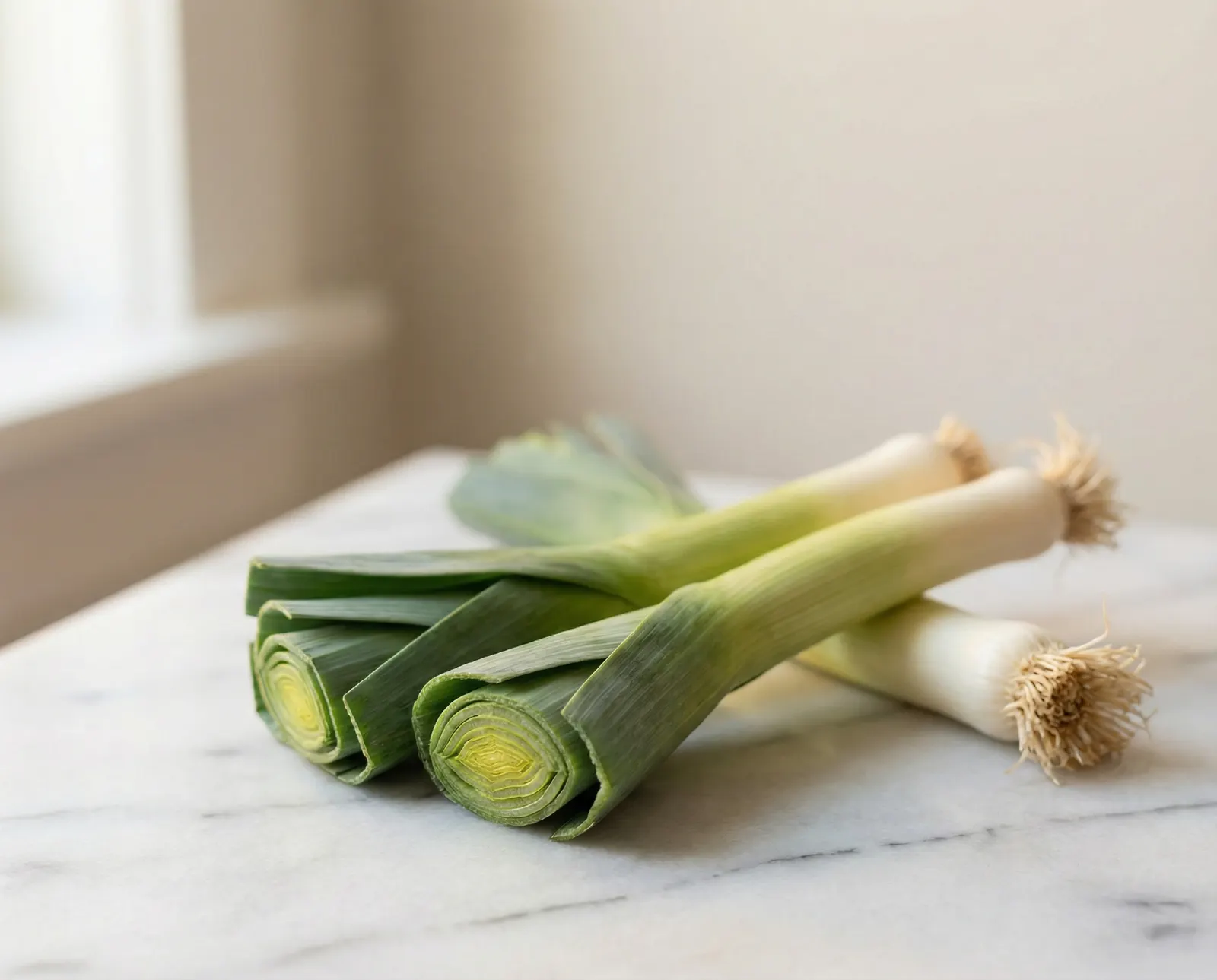
Leeks are a mild, sweet relative of the onion. They are packed with Vitamin K, Vitamin A, and manganese. Most importantly, leeks are rich in inulin, a prebiotic fiber that supports a healthy gut microbiome. Because they can be fibrous, they must be cleaned thoroughly and cooked until completely soft.
How to serve Leek, by age
- 6mo
From 6 months: Silky puree (best when mixed) or buttery soft stalks.
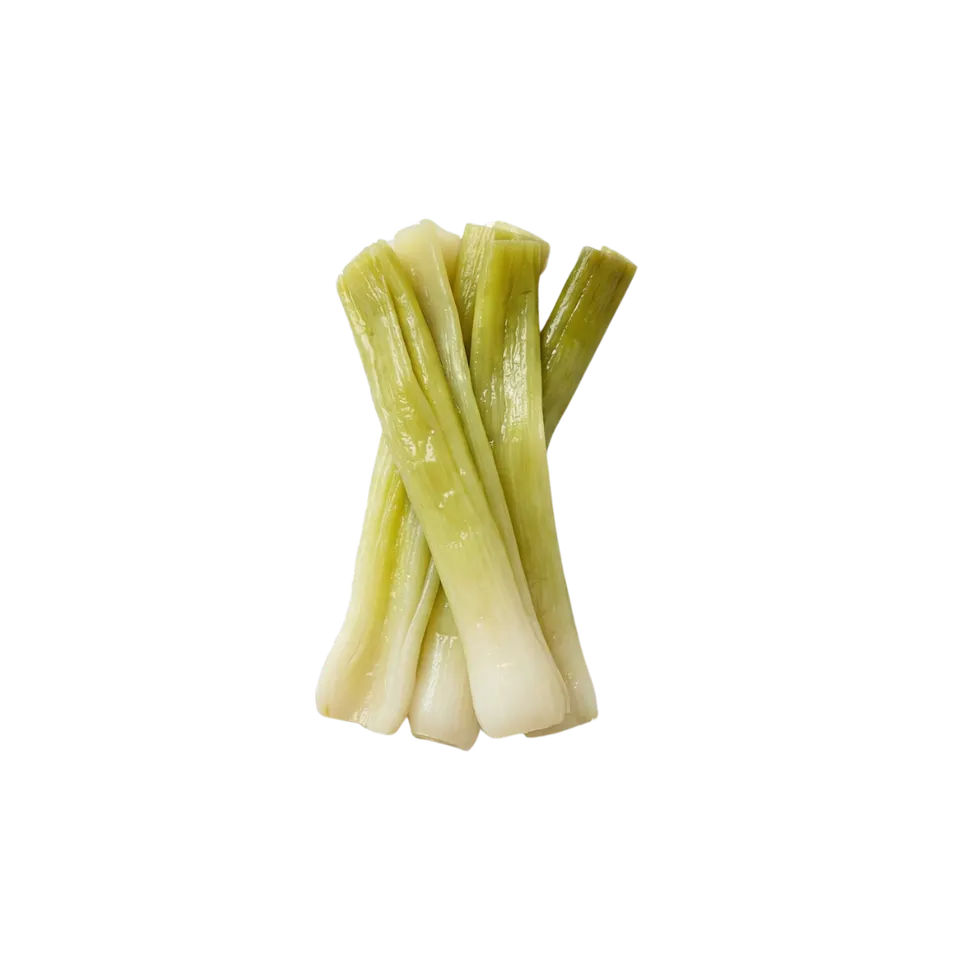
Serve as a smooth puree. Use only the white and light green parts (discard the tough dark green tops). Steam until very soft and blend with potato or cauliflower to create a creamy texture. For BLW, you can offer a large, halved leek stalk steamed until buttery soft, but monitor closely as it can be stringy.
- 9mo
From 9 months: Minced, sautéed 'melted' texture.
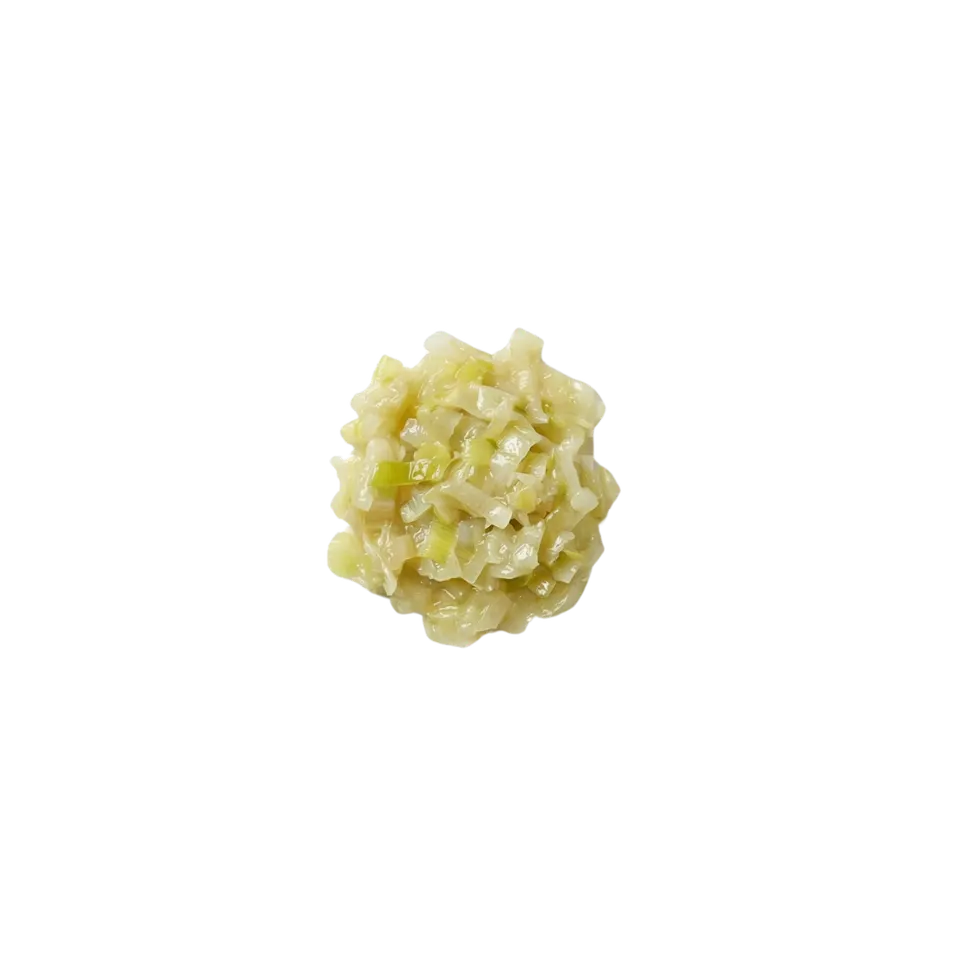
Offer finely chopped, melted leeks. Sauté them in a little olive oil or butter until they are translucent and 'melt-in-the-mouth' soft. Mix into omelets, risottos, or mashed vegetables. Ensure no long, stringy pieces remain.
- 12mo
From 12 months: Soft-cooked chunks or incorporated in dishes.
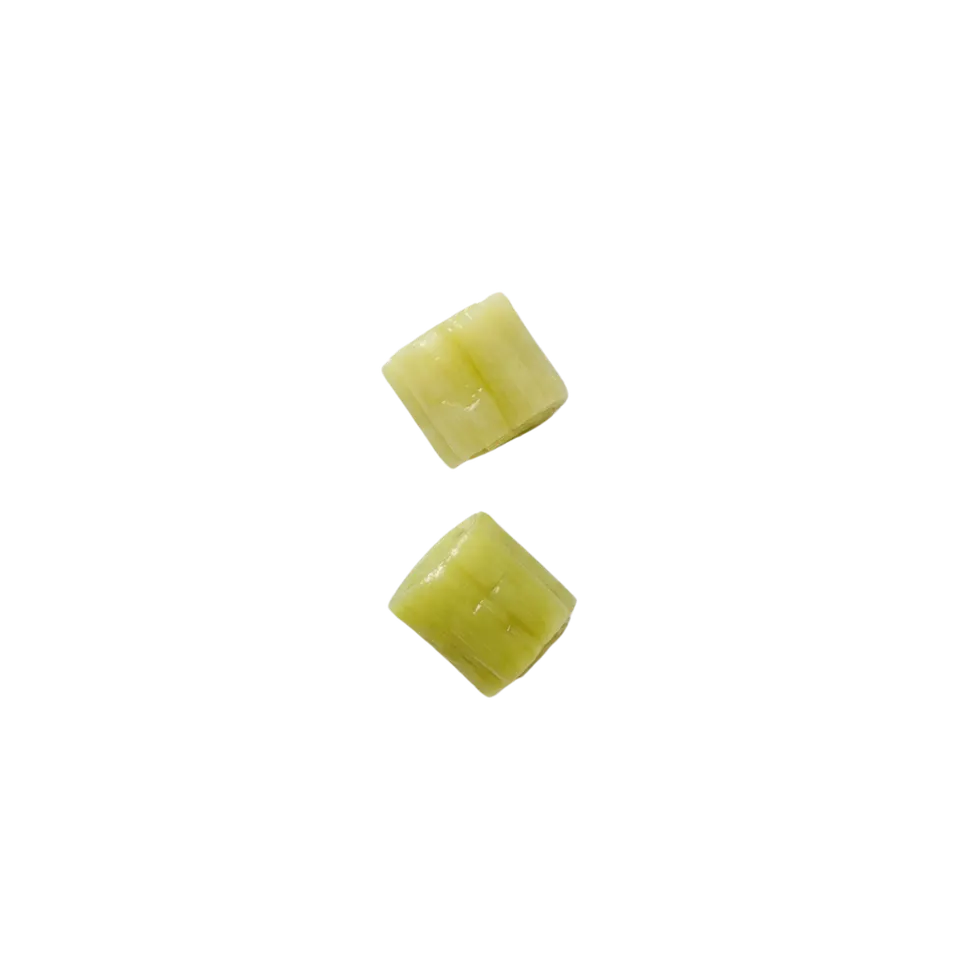
Toddlers can enjoy leeks in savory tarts, quiches, or soups like potato-leek soup. You can also offer larger pieces of braised leek. It is a wonderful way to add depth of flavor to meals without using harsh onions.
Choking risk & safe preparation
Moderate choking risk
Leeks are naturally fibrous. If not cooked long enough, the layers can remain tough and stringy, posing a gagging or choking risk. Always use the white and light green parts and cook until they can be easily mashed with a tongue against the roof of the mouth.
Allergen information
Not a common childhood allergen. Reactions are possible with any food, so introduce it on its own first.
Nutrition & benefits
High in Vitamin K (47mcg) and Vitamin A. Leeks are unique for their high concentration of kaempferol, a flavonoid that protects blood vessel linings.
- Digestion-friendly
Per 100 g
- Energy
- 61kcal
- Protein
- 1.5g
- Fat
- 0.3g
- Fiber
- 1.8g
- Iron
- 2.1mg
- Vitamin C
- 12mg
See all nutrients (25)
Macronutrients
- Energy
- 61 kcal
- Protein
- 1.5 g
- Carbohydrates
- 14.2 g
- Fat
- 0.3 g
Key Minerals
- Iron
- 2.1 mg
- Calcium
- 59 mg
- Zinc
- 0.1 mg
- Sodium
- 20 mg
- Potassium
- 180 mg
- Magnesium
- 28 mg
- Phosphorus
- 35 mg
- Selenium
- 1 mcg
- Copper
- 0.1 mg
- Manganese
- 0.5 mg
Vitamins
- Vitamin A
- 83 mcg
- Vitamin C
- 12 mg
- Vitamin D
- 0 mcg
- Vitamin B6
- 0.2 mg
- Vitamin B12
- 0 mcg
- Vitamin E
- 0.9 mg
- Vitamin K
- 47 mcg
- Folate
- 64 mcg
- Thiamin (B1)
- < 0.1 mg
- Choline
- 9.5 mg
Other
- Fiber
- 1.8 g
Source: USDA FoodData Central
Pairs well with
Recipes with Leek
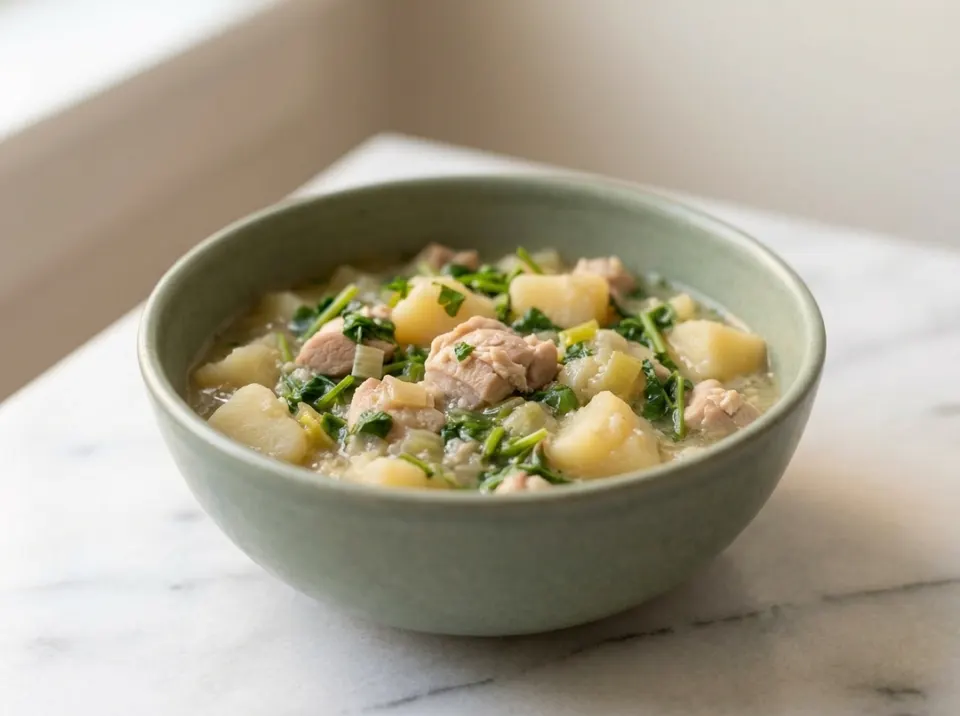
Chicken, Potato & Watercress Warm Pot
A gentle and nourishing spoon-fed pot made with tender chicken thigh, soft diced potato, and mild leeks simmered in water. Stirring in fresh watercress at the end creates a colorful, softly lumpy texture ideal for babies developing their pincer grasp and chew skills.
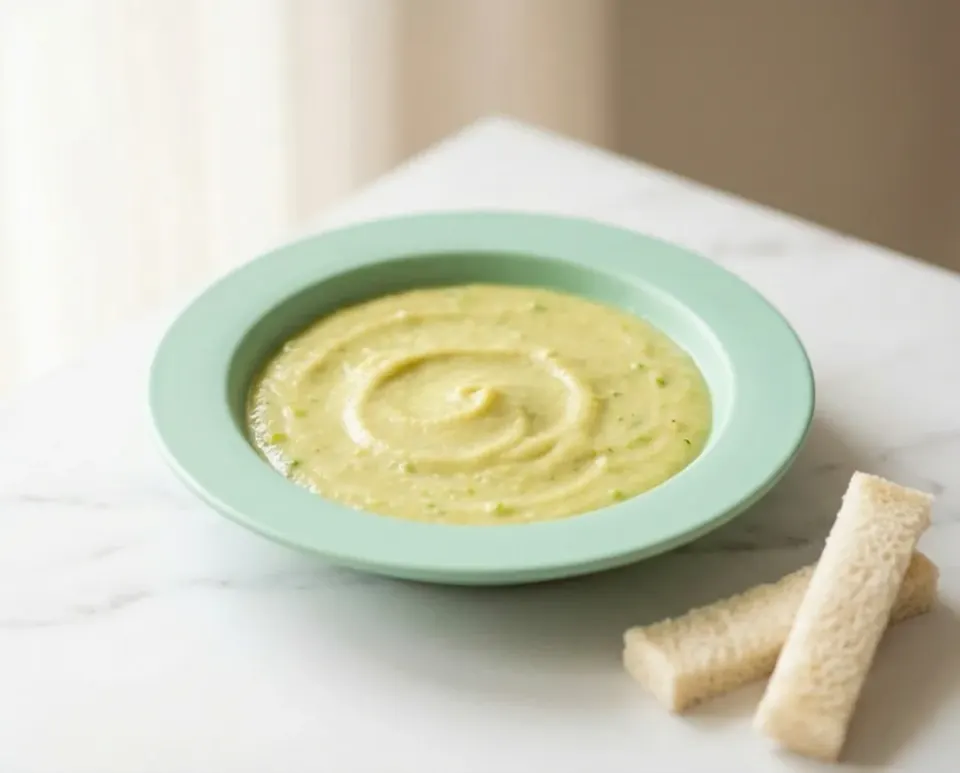
Creamy Leek, Potato & Pea Soup
A velvety, classic European soup made with gently sautéed leeks, tender potatoes, and sweet peas, finished with a touch of butter. Thick enough for baby to scoop or dip bread into, this comforting lunch is packed with vitamins and fibre.
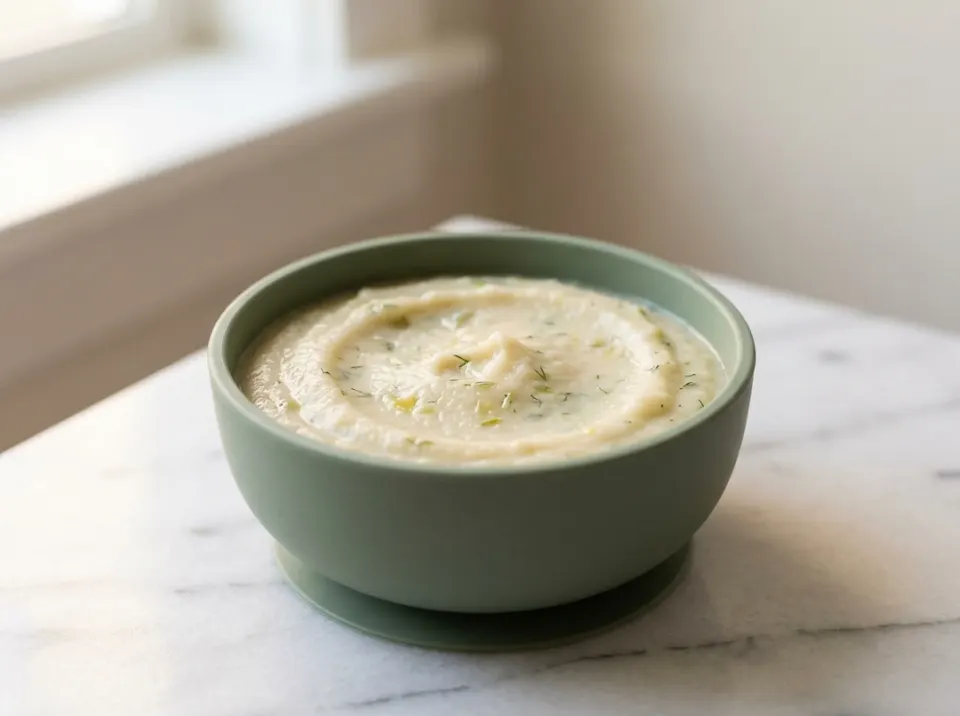
Creamy Roasted Cauliflower & Leek Purée
A savory, velvet-smooth breakfast cream crafted from oven-roasted cauliflower and slow-sautéed leeks. Subtle dill adds a fresh herb note that encourages adventurous eating for 9-month-old babies expanding their palate.
Frequently asked
How do I clean leeks properly for my baby?
Cut the leek lengthwise and rinse it under cold running water, fanning out the layers to wash away any trapped dirt or sand. For babies, it is best to chop them first and then soak the pieces in a bowl of water to ensure they are 100% clean.
Can leeks cause gas?
Like other members of the onion family, leeks can cause mild gas because of the prebiotic fiber (inulin). However, they are usually much easier to digest than raw onions. Start with small amounts.

Track Leek in the Nica app
Log foods, track reactions, and plan meals — all in one place.

