When can babies eat Water?
From 6 months
Start with: Thin liquid.
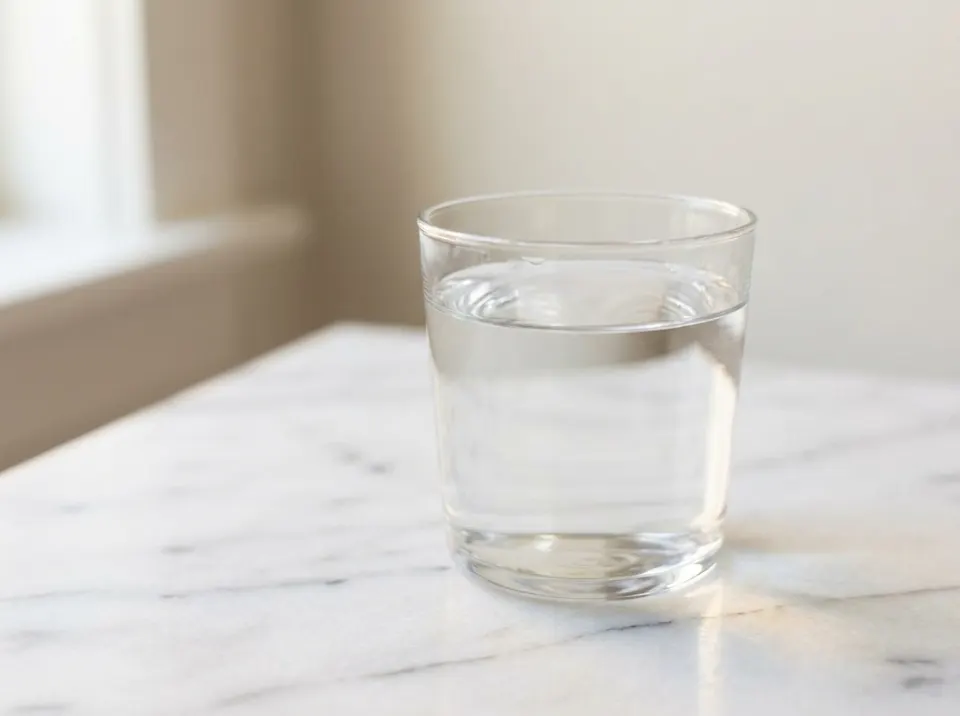
Plain water is an essential part of your baby's transition to solid foods starting at six months. Before six months, babies receive all necessary hydration from breast milk or formula, making supplemental water unnecessary. Offering small sips from an open cup or straw cup at mealtimes supports digestion, helps prevent constipation, and builds oral motor skills.
How to serve Water, by age
- 6mo
From 6 months: Thin liquid.
Offer 1 to 2 ounces of plain water in a small open silicone cup or training cup with meals. Hold the cup and assist your baby with taking tiny sips.
- 9mo
From 9 months: Thin liquid.
Serve 2 to 4 ounces (60-120 ml) of water per day in a small open cup or straw cup alongside solid meals and snacks.
- 12mo
From 12 months: Thin liquid.
Offer 4 to 8 ounces (120-240 ml) of water across the day in an open cup or straw cup with meals and during active play.
Choking risk & safe preparation
Low choking risk
Water is a thin liquid that does not pose an airway blockage risk like solid food, but it can cause coughing or sputtering as babies learn to coordinate breathing and swallowing. Practice with small sips in a small open cup held by an adult or a valveless straw cup to help your baby develop liquid control safely.
Allergen information
Not a common childhood allergen. Reactions are possible with any food, so introduce it on its own first.
Nutrition & benefits
Water provides zero calories and macronutrients, but it is vital for cellular function, temperature regulation, and keeping stools soft as your baby begins digesting solid foods.
- Digestion-friendly
- Motor Skills
- Nutrient Absorption
Per 100 g
See all nutrients (4)
Key Minerals
- Calcium
- 10 mg
- Sodium
- 2 mg
- Magnesium
- 2 mg
- Copper
- < 0.1 mg
Source: USDA FoodData Central
Pairs well with
Recipes with Water
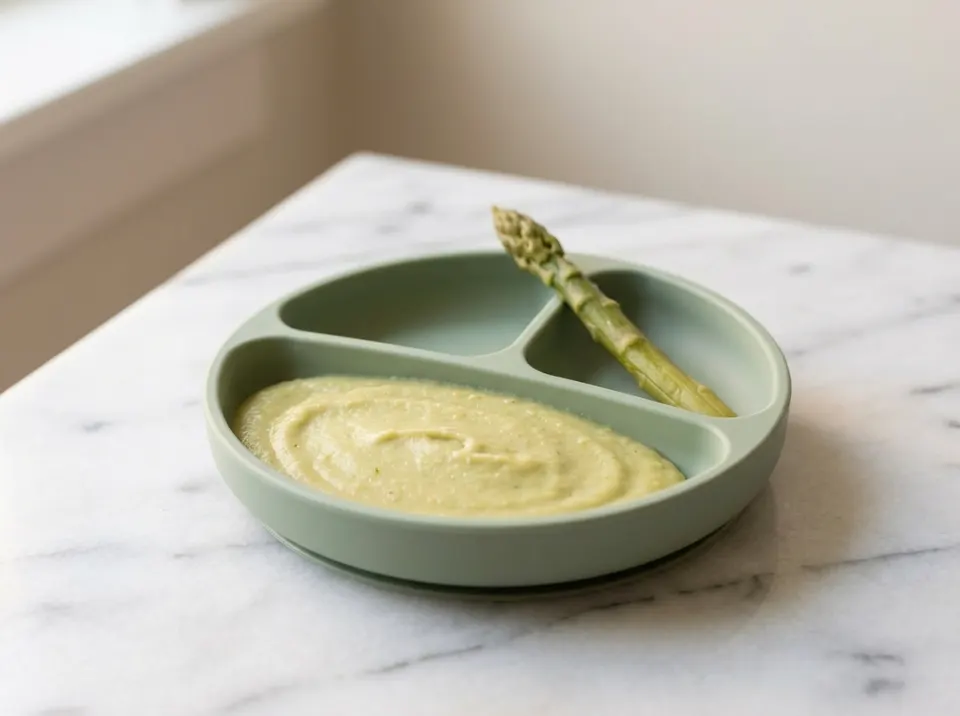
Silky Asparagus & Red Lentil Mash with BLW Spear
This vibrant combination merges tender red lentils, creamy potato, and nutrient-dense asparagus. Rich in plant-based iron and gentle on little tummies, it offers both a smooth puree for spoon feeding and a soft spear for baby-led weaning exploration.
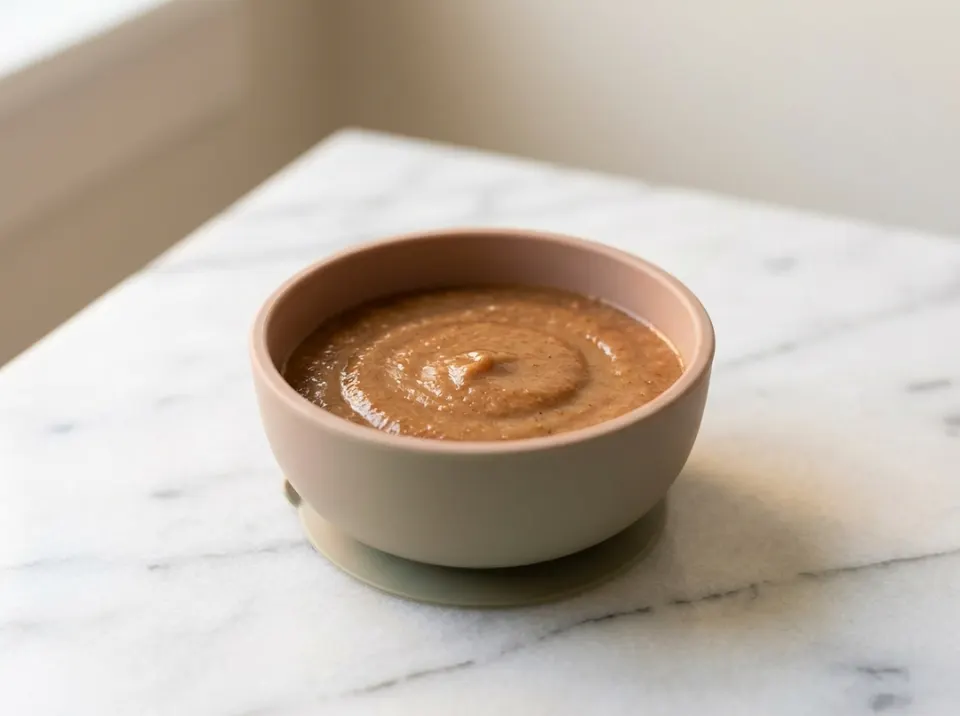
Gently Simmered Sarma Purée for Baby
Inspired by traditional Balkan sarma, this comforting bowl combines tender beef, shredded cabbage, tomato, and soft brown rice. Specially blended into a smooth purée, it provides a gentle, iron-rich dish perfect for babies starting solids.
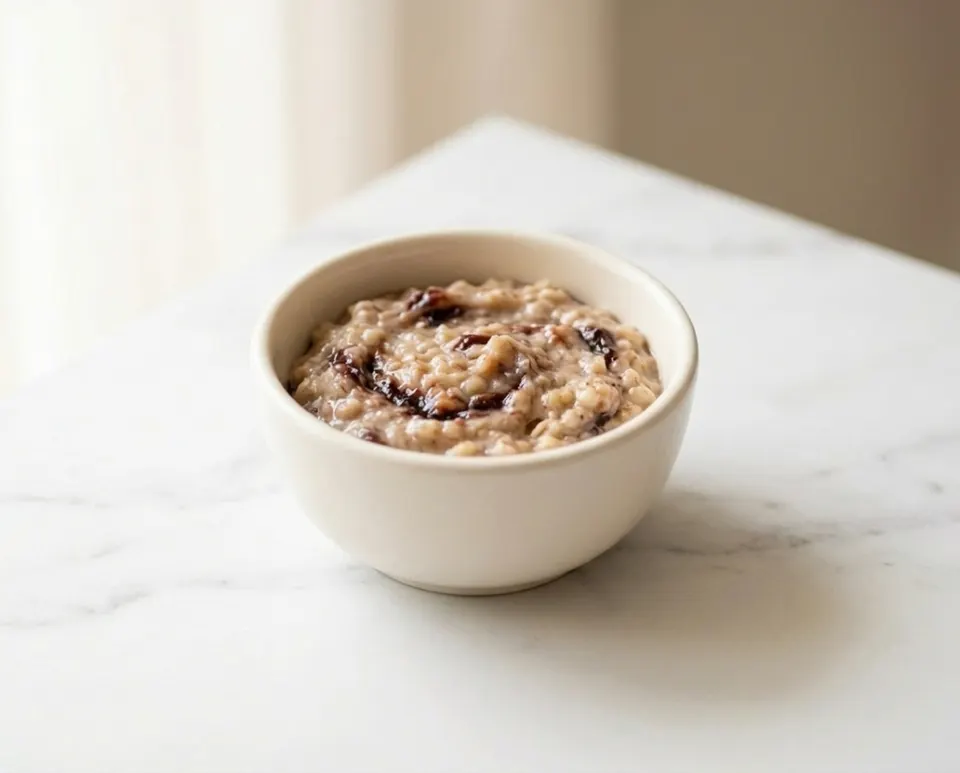
Barley & Prune Breakfast Pudding
A creamy, comforting breakfast pudding made with pearl barley, stewed prunes, and full-fat yogurt. Barley is a fiber-rich whole grain packed with B vitamins, selenium, and manganese. Prunes are one of the highest iron plant foods and naturally support healthy digestion — a common concern when babies start solids.
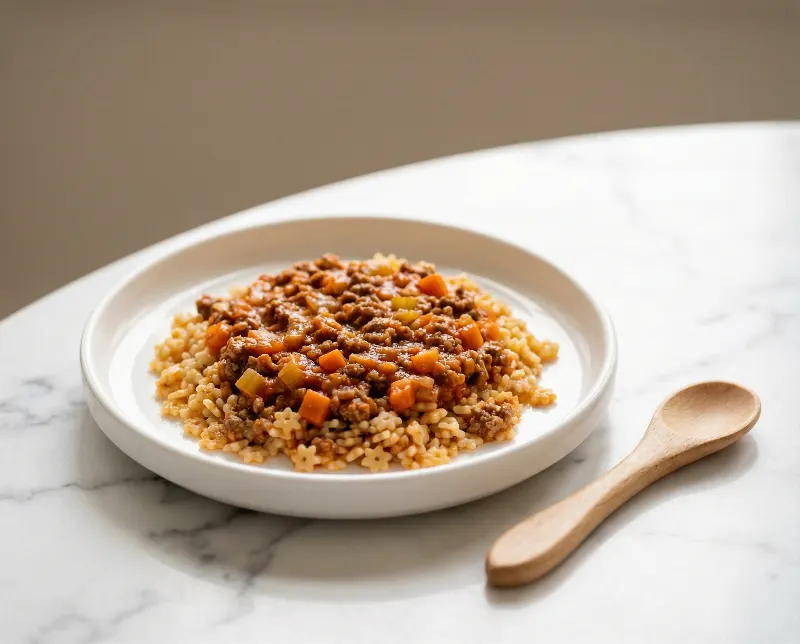
Iron-Rich Beef Bolognese (Baby Version)
A nutrient-dense, slow-cooked sauce packed with iron and vitamins. This version uses finely minced beef and soft-cooked vegetables in a natural tomato base, perfect for serving over tiny pasta or mashed potatoes.
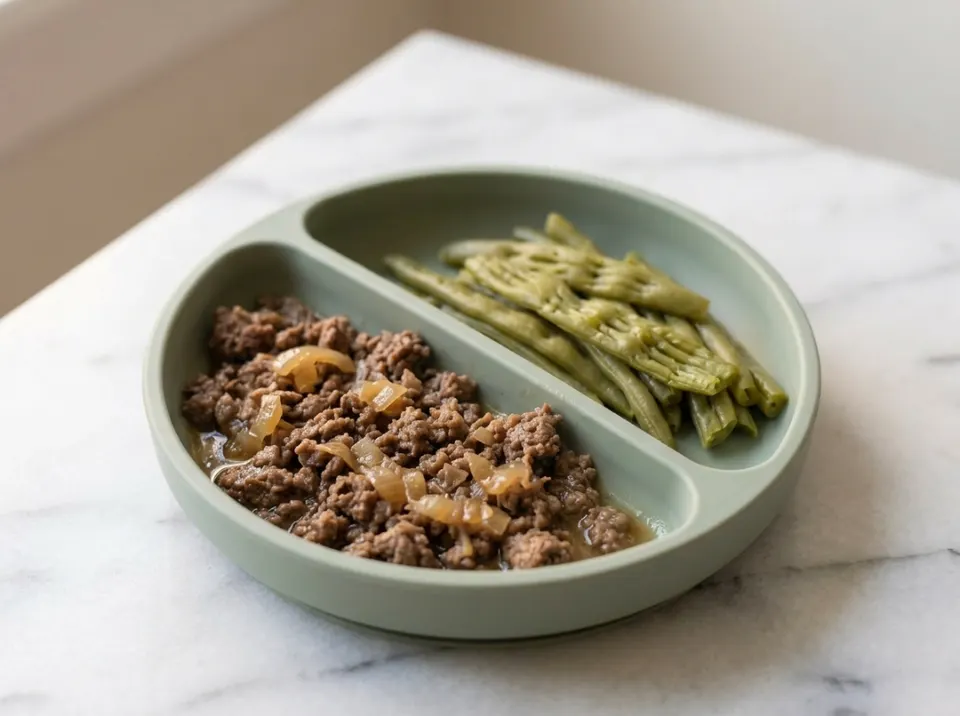
Gently Stewed Beef with Soft Green Beans and Sweet Onion
Finely crumbled beef and delicate green beans are gently simmered with sweet caramelized onions to create a soft, iron-rich meal. Perfect for 9-month-olds developing their pincer grasp with flattened green bean bites alongside moist beef crumbles.
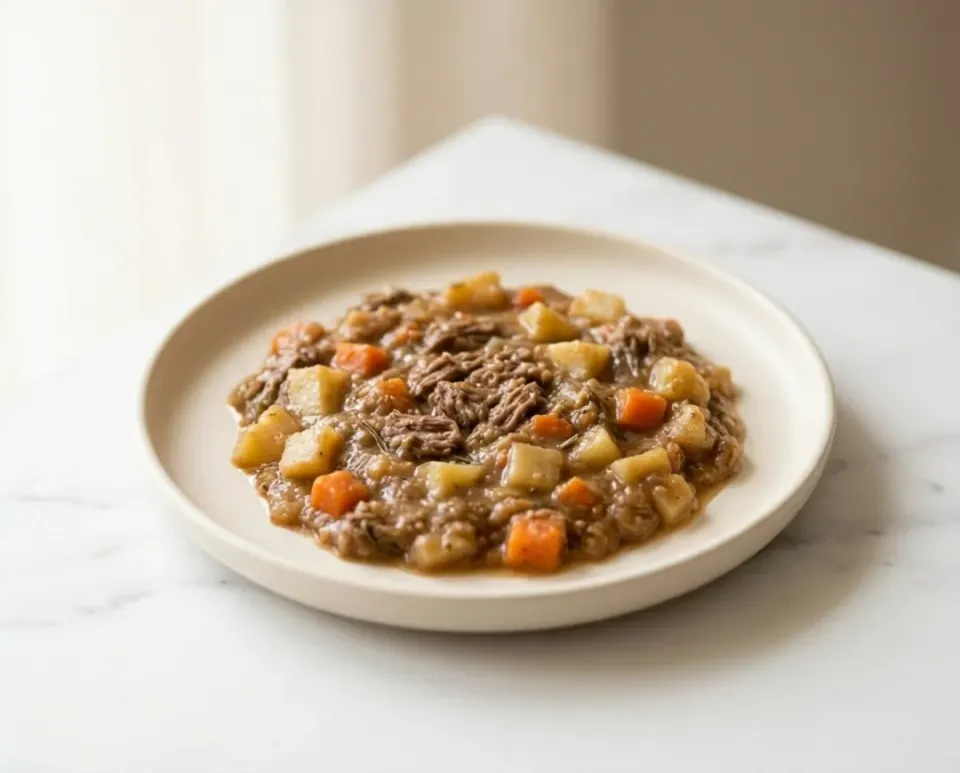
Beef & Root Vegetable Stew
A hearty, slow-cooked stew made with tender beef, carrot, parsnip, and potato. This iron-rich meal is one of the best ways to introduce red meat to your baby, with vegetables that melt into a nourishing, naturally thick sauce.
Frequently asked
Why shouldn't babies drink water before six months of age?
Before six months, a baby's kidneys are immature, and their stomach capacity is small. Breast milk or formula supplies all necessary hydration and calories. Giving water too early can lead to electrolyte imbalances such as water intoxication and may displace essential feedings.
How much water should my baby drink between 6 and 12 months?
Aim for about 2 to 4 ounces (60 to 120 ml) per day, offered in small amounts during meals. The main goal at this stage is learning cup drinking skills and aiding digestion, while breast milk or formula remains the primary source of nutrition and fluids.
What kind of cup is best for introducing water to babies?
Small, open training cups and weighted straw cups are recommended by feeding specialists. They promote healthy oral motor development and mature swallowing patterns, unlike traditional spouted sippy cups which can prolong an infant suckling pattern.
Does tap water need to be boiled before giving it to an older baby?
If you have safe, treated municipal tap water, boiling is generally not necessary once your baby reaches six months. If you rely on well water or live in an area with water quality concerns, use boiled and cooled water or tested bottled water low in sodium and fluoride.

Track Water in the Nica app
Log foods, track reactions, and plan meals — all in one place.

