When can babies eat Asparagus?
From 6 months
Start with: Silky puree or very soft spears.
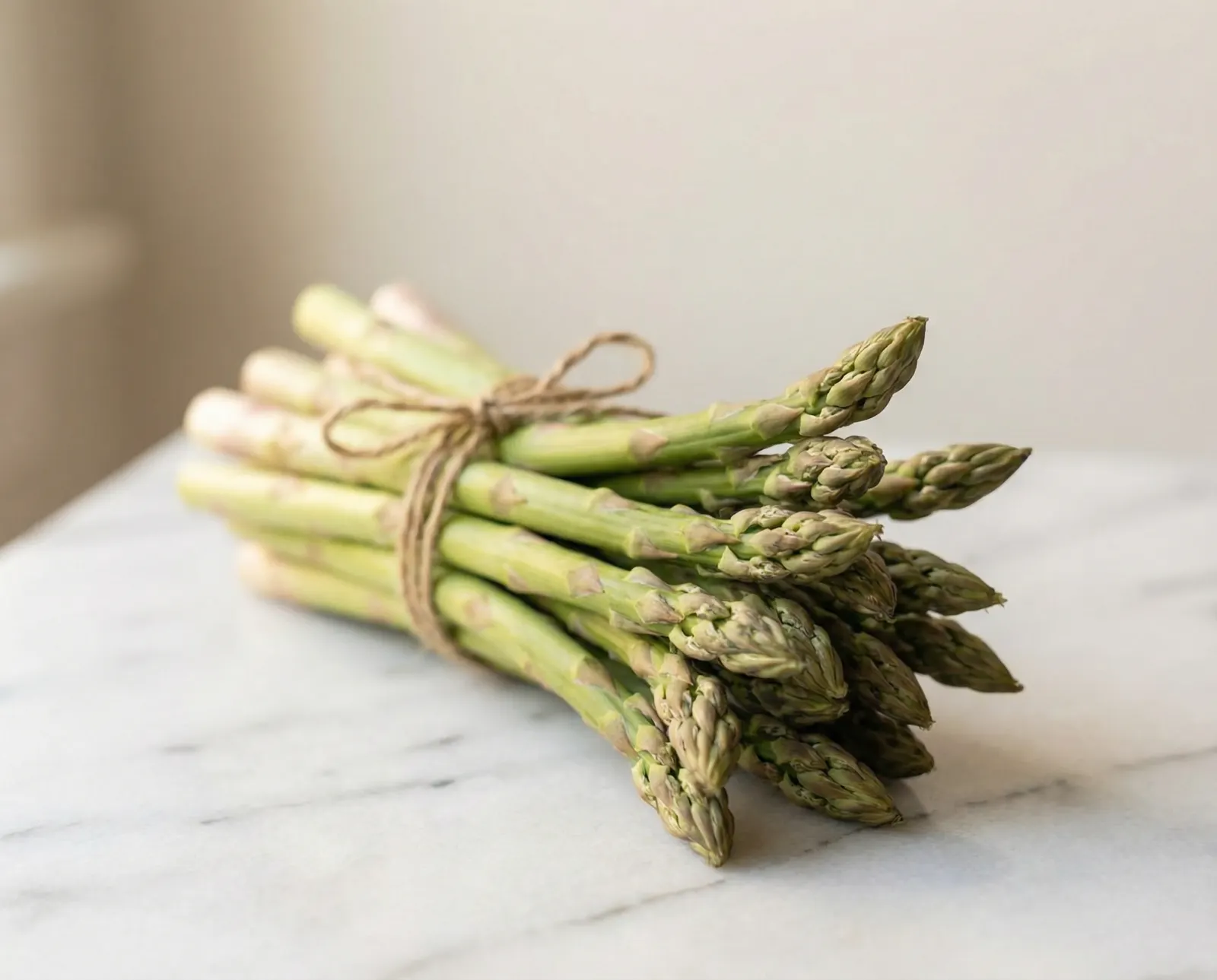
Asparagus is a nutritional gem, providing high levels of Vitamin K for bone health and Folate for brain development. It is also an excellent source of prebiotic fiber, which feeds the 'good' bacteria in a baby's developing gut. While it has a unique flavor, its spear-like shape makes it a wonderful finger food for babies to practice their grip.
How to serve Asparagus, by age
- 6mo
From 6 months: Silky puree or very soft spears.
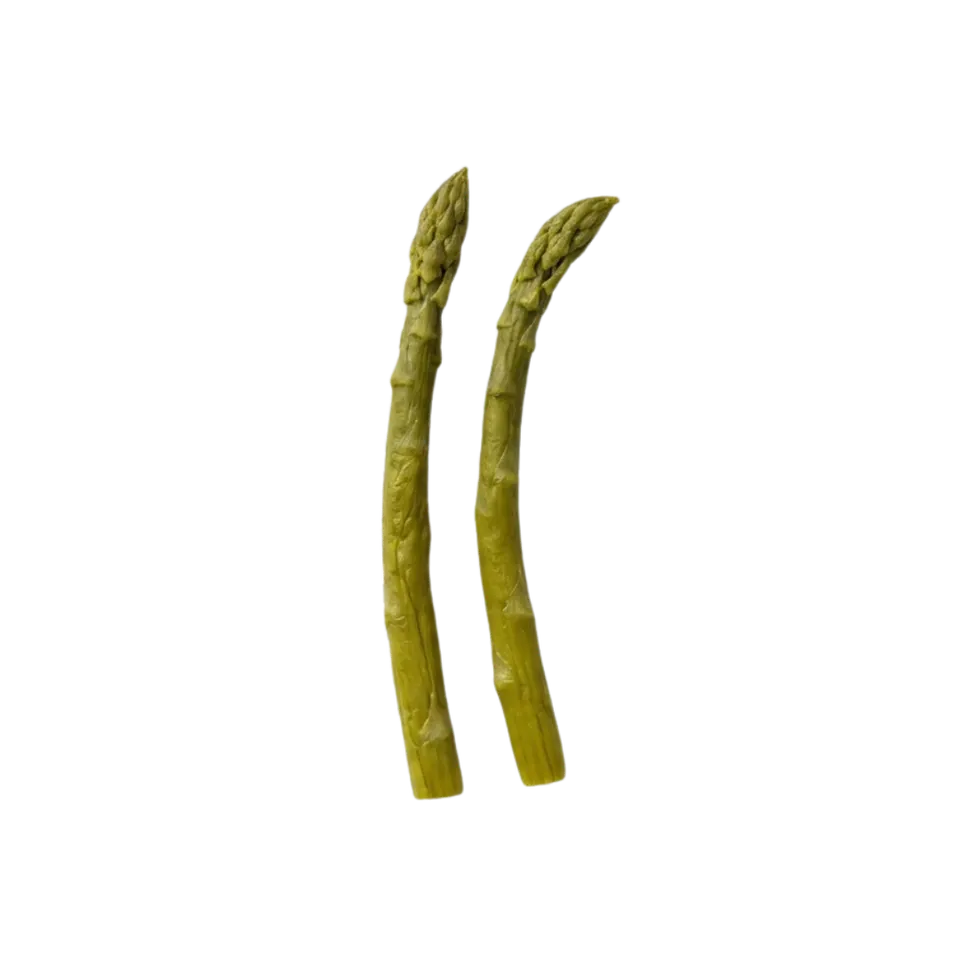
Serve as a smooth puree. Steam only the tender tips (the top 2-3 inches) as the stalks can be too stringy. Blend with a little water or breast milk. For BLW, offer a single, very soft-cooked, thick asparagus spear with the woody bottom inch removed. The baby can suck on the tender tip while holding the stalk.
- 9mo
From 9 months: Soft, finely chopped tips.
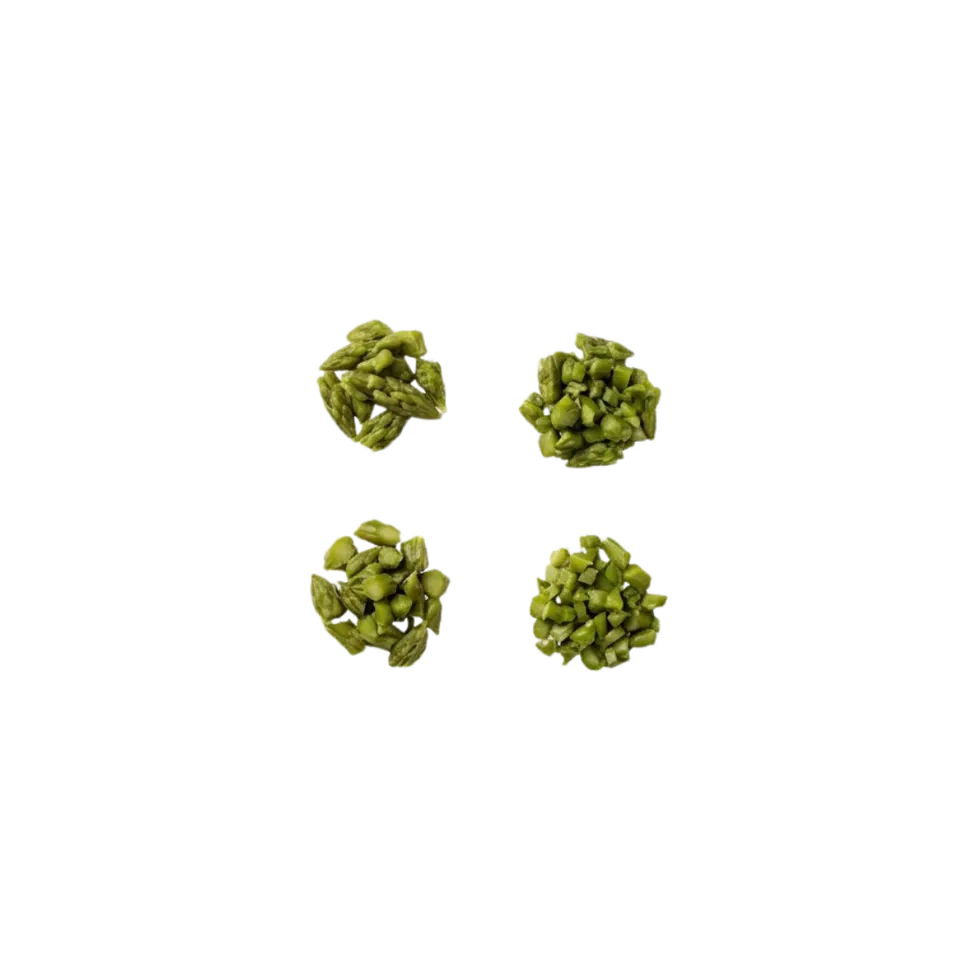
Offer finely chopped, soft-cooked asparagus tips. These small pieces are perfect for practicing the pincer grasp. You can also mix chopped asparagus into a creamy risotto, scrambled eggs, or a light pasta sauce. Ensure the pieces are soft enough to be smashed with the tongue.
- 12mo
From 12 months: Tender roasted or steamed spears.
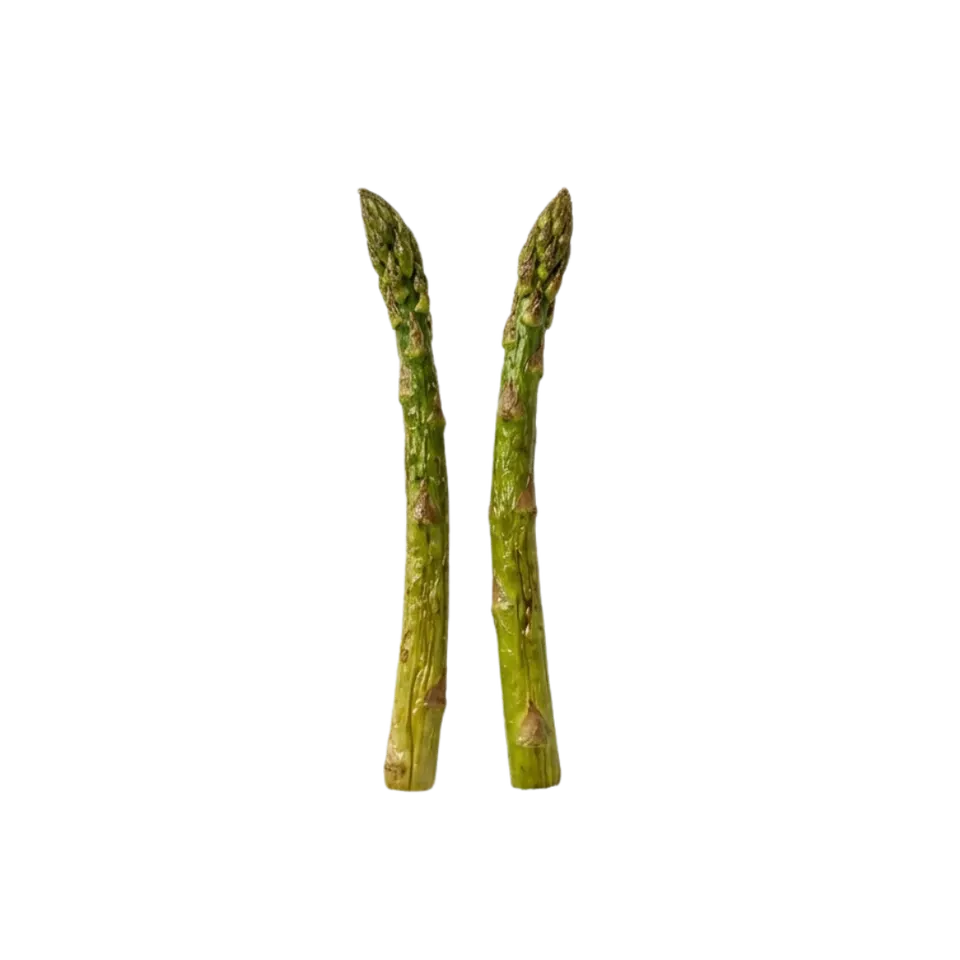
Toddlers can enjoy roasted asparagus drizzled with a tiny bit of olive oil and a sprinkle of lemon juice. You can also serve them 'asparagus fries' (lightly breaded and baked). At this stage, they can handle the slightly firmer texture of the middle stalk if it is cooked well.
Choking risk & safe preparation
Moderate choking risk
The stringy, fibrous nature of asparagus stalks can be difficult for babies to swallow. Always remove the woody, tough ends (the bottom third). Cook until tender enough that the tip disintegrates when pressed.
Allergen information
Not a common childhood allergen. Reactions are possible with any food, so introduce it on its own first.
Nutrition & benefits
Contains 'Asparagine,' an amino acid that supports brain development. It is also one of the best sources of Vitamin K and glutathione, a powerful antioxidant.
- Brain Food
- Digestion-friendly
Per 100 g
- Energy
- 20kcal
- Protein
- 2.2g
- Fat
- 0.1g
- Fiber
- 2.1g
- Iron
- 2.1mg
- Vitamin C
- 5.6mg
See all nutrients (25)
Macronutrients
- Energy
- 20 kcal
- Protein
- 2.2 g
- Carbohydrates
- 3.9 g
- Fat
- 0.1 g
Key Minerals
- Iron
- 2.1 mg
- Calcium
- 24 mg
- Zinc
- 0.5 mg
- Sodium
- 2 mg
- Potassium
- 202 mg
- Magnesium
- 14 mg
- Phosphorus
- 52 mg
- Selenium
- 2.3 mcg
- Copper
- 0.2 mg
- Manganese
- 0.2 mg
Vitamins
- Vitamin A
- 38 mcg
- Vitamin C
- 5.6 mg
- Vitamin D
- 0 mcg
- Vitamin B6
- < 0.1 mg
- Vitamin B12
- 0 mcg
- Vitamin E
- 1.1 mg
- Vitamin K
- 41.6 mcg
- Folate
- 52 mcg
- Thiamin (B1)
- 0.1 mg
- Choline
- 16 mg
Other
- Fiber
- 2.1 g
Source: USDA FoodData Central
Pairs well with
Recipes with Asparagus
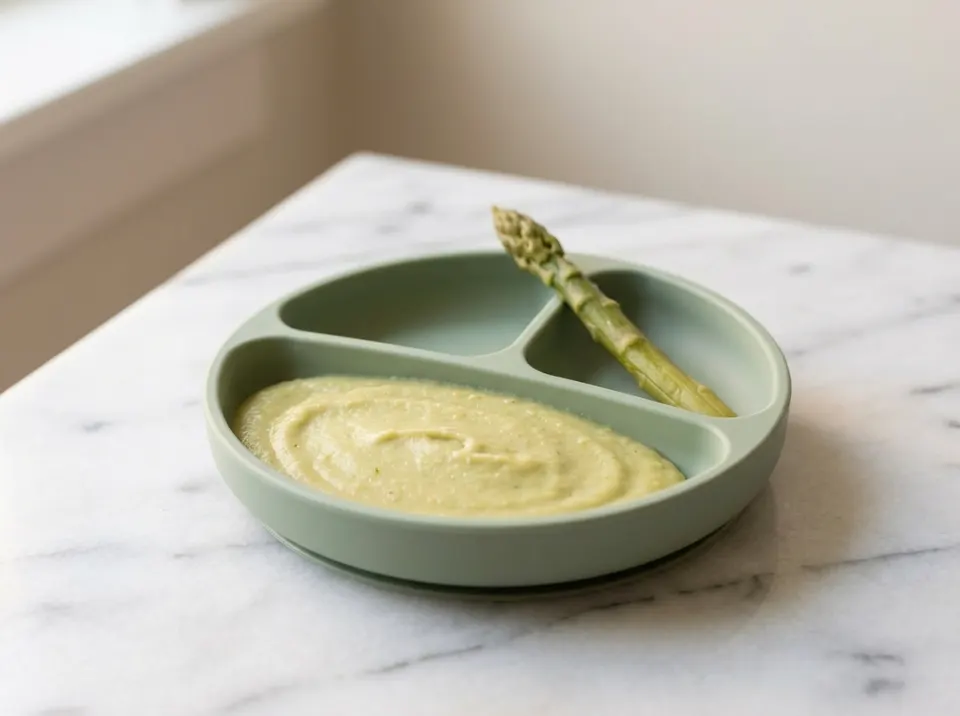
Silky Asparagus & Red Lentil Mash with BLW Spear
This vibrant combination merges tender red lentils, creamy potato, and nutrient-dense asparagus. Rich in plant-based iron and gentle on little tummies, it offers both a smooth puree for spoon feeding and a soft spear for baby-led weaning exploration.
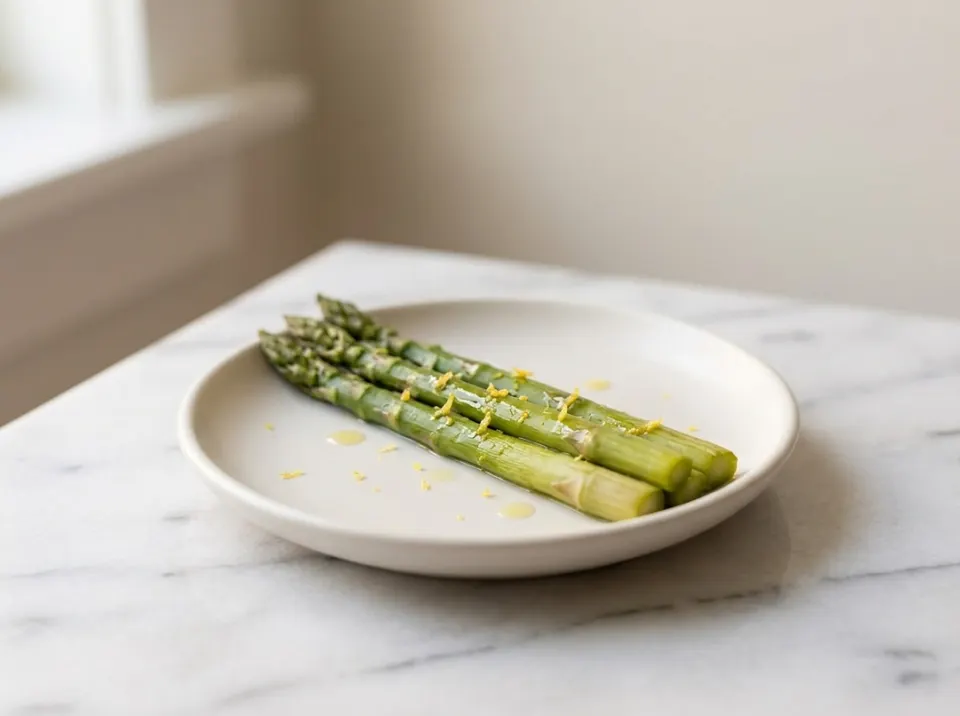
Soft Steamed Asparagus Spears with Lemon & Olive Oil
Tender steamed asparagus spears are a wonderful first finger food for babies starting their baby-led weaning journey. Lightly finished with extra virgin olive oil and a delicate hint of fresh lemon zest, these soft spears are easy for little hands to hold and safe to gnaw on.
Frequently asked
Why does my baby's urine smell strange after eating asparagus?
Don't worry! This is caused by the breakdown of 'asparagusic acid.' It is completely harmless and happens to many people. It does not mean your baby is dehydrated or sick.
Should I peel asparagus for my baby?
If the spears are very thick, peeling the skin off the bottom half of the stalk can make it much more tender and easier for the baby to chew.

Track Asparagus in the Nica app
Log foods, track reactions, and plan meals — all in one place.

