When can babies eat Swede?
Safe from: 6 months
Common allergen: No
Choking risk: Moderate
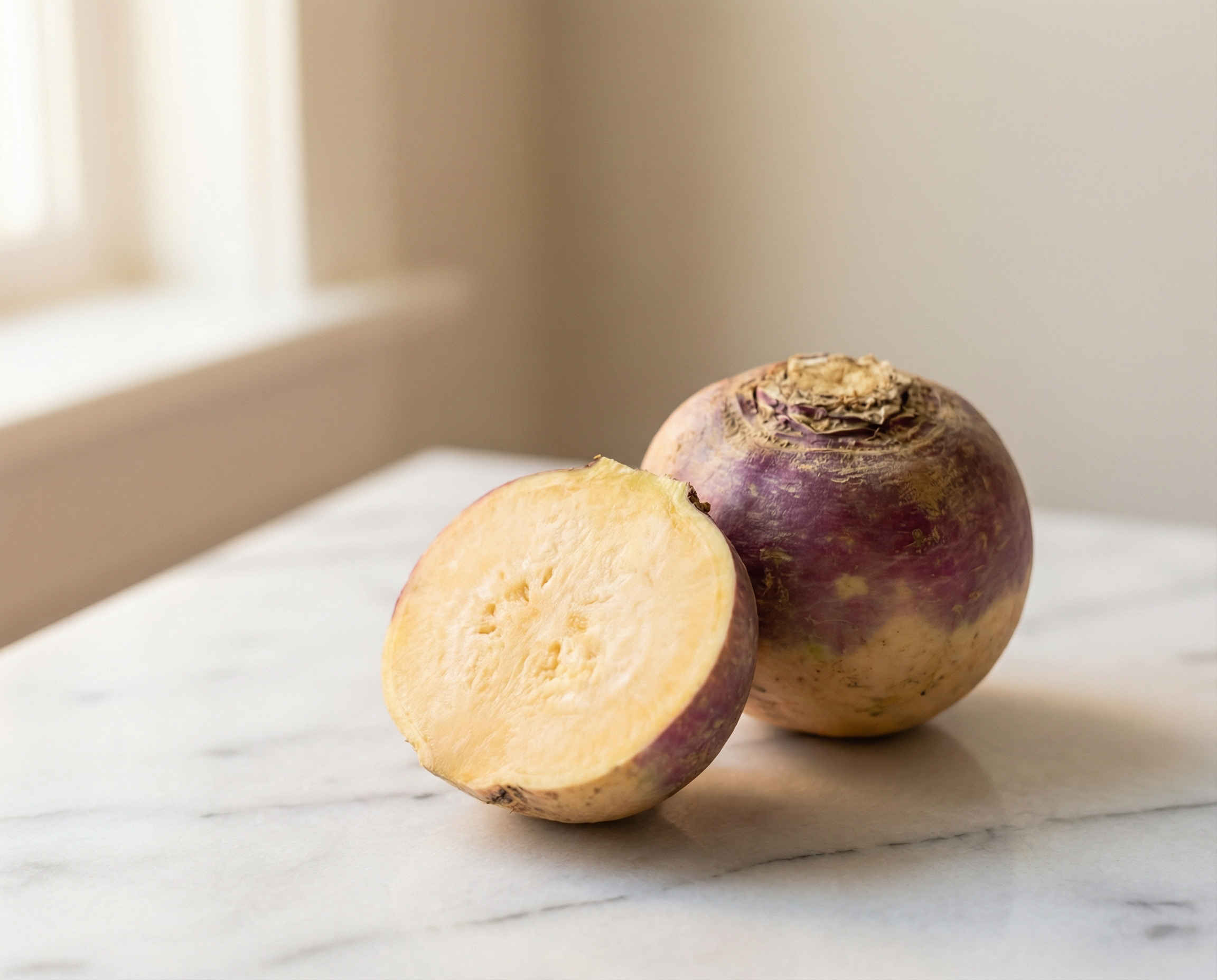
Swede is a hardy root vegetable that is a nutritional powerhouse for growing babies. It is richer in Vitamin C and beta-carotene than the common turnip. Known for its creamy texture and mild, sweet flavor when gatuar (cooked), it is an ideal first food for building a strong immune system and supporting healthy skin and vision.
Age guide
| Stage | Min age | Serving | Texture |
|---|---|---|---|
| 6m+ | 6m | Serve as a smooth puree. Peel the thick, waxy skin deeply, dice, and steam until very soft. Swede purees beautifully on its own or mixed with carrots. For BLW, offer a large, finger-sized roasted or steamed wedge that the baby can easily hold and gum. | Smooth, buttery puree or soft wedges. |
| 9m+ | 9m | Offer small, soft-cooked cubes or 'fingers'. Roasting swede with a tiny bit of rosemary or thyme enhances its natural sweetness. It is also excellent when mashed coarsely (fork-mash) to introduce more texture while still being safe for the baby to swallow. | Soft-cooked chunks or fork-mashed texture. |
| 12m+ | 12m | Toddlers can enjoy swede in many forms: roasted chunks, in hearty stews, or even grated and made into vegetable fritters. Swede is a great, lower-carb alternative to potatoes in family meals like shepherd's pie. | Firm but tender cooked chunks. |
Pairs well with
Frequently asked
Track Swede in the Nica app
Log foods, track reactions, and plan meals — all in one place.