When can babies eat Hummus?
Safe from: 6 months
Common allergen: Yes
Choking risk: Low
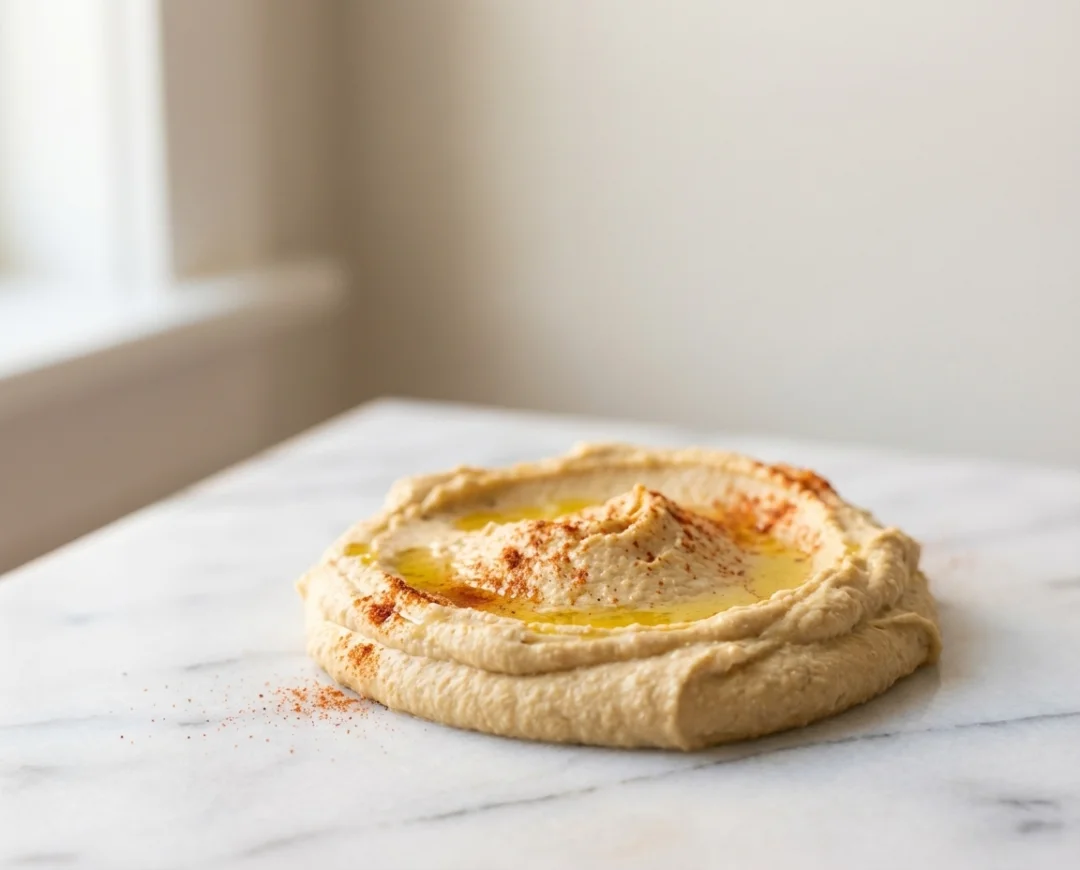
Hummus is a traditional Middle Eastern dip made from cooked, mashed chickpeas blended with tahini, lemon juice, and olive oil. It is a dense source of plant-based protein, iron, and healthy monounsaturated fats. For babies, it is a perfect high-calorie snack that supports brain development and provides a safe texture for practicing self-feeding.
Age guide
| Stage | Min age | Serving | Texture |
|---|---|---|---|
| 6m+ | 6m | Introduce hummus by spreading a thin layer on a soft piece of toast or offering a small amount on a pre-loaded spoon. At 6 months, ensure the hummus is completely smooth and contains no whole chickpeas. Choose a version with very low sodium and no added honey or strong spices. | Completely smooth, spreadable paste. |
| 9m+ | 9m | Serve hummus as a dip for soft-cooked vegetable sticks like steamed carrots or cucumber spears. This encourages the 'pincer grasp' and self-feeding. You can now introduce hummus with slightly more texture or small amounts of minced garlic for flavor exploration. | Thick, slightly textured dip. |
| 12m+ | 12m | Toddlers can enjoy hummus in wraps, sandwiches, or as a base for a 'snack plate' with crackers and fruit slices. Hummus is an excellent calorie-booster for active toddlers who may be going through a picky eating phase with whole beans. | Creamy paste, can be chunkier. |
Pairs well with
Frequently asked
Recipes with Hummus
Track Hummus in the Nica app
Log foods, track reactions, and plan meals — all in one place.