When can babies eat Eggplant?
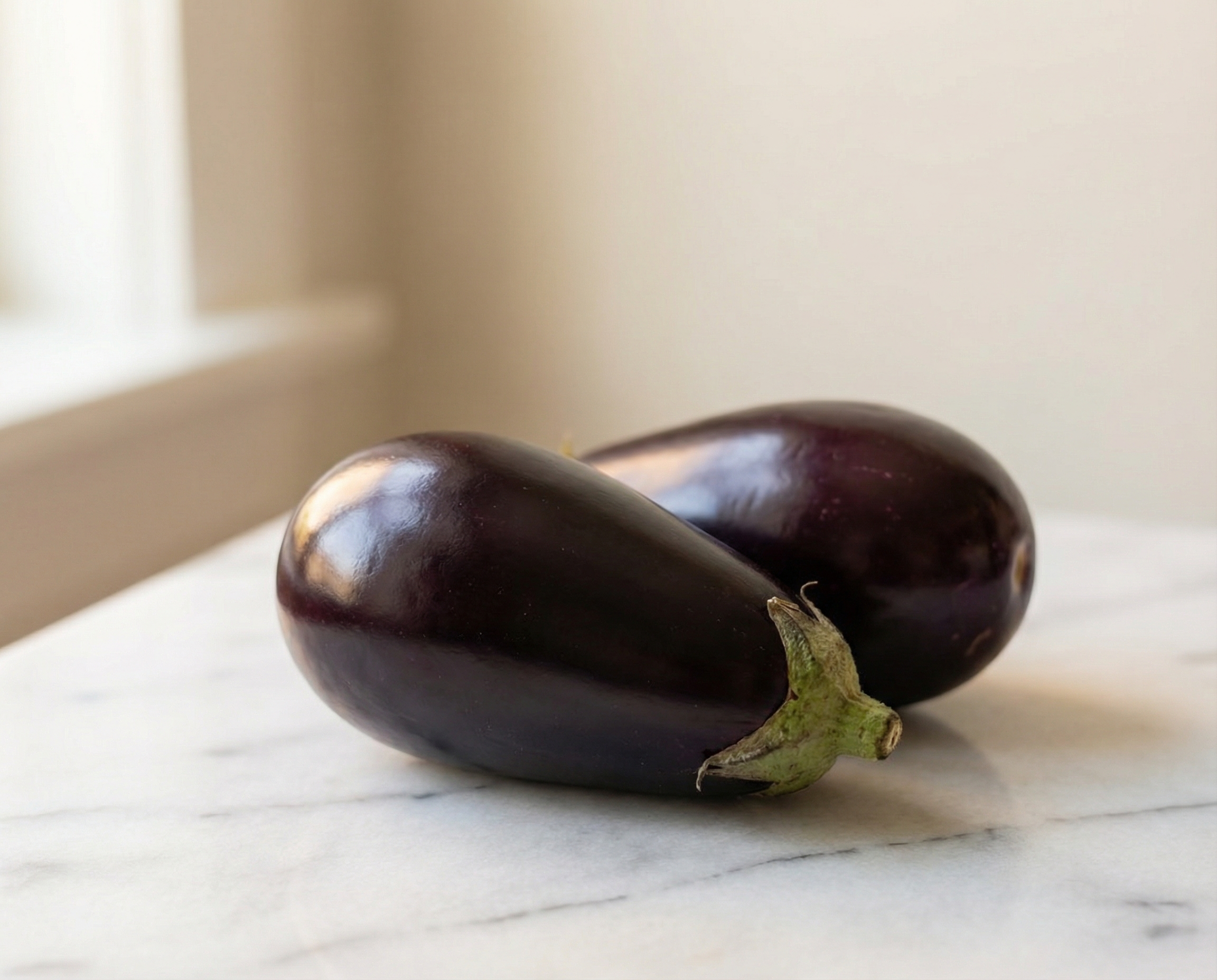
Eggplant is a versatile vegetable known for its unique texture and brain-protecting antioxidants. It is a good source of fiber, B-vitamins, and potassium. Its mild flavor makes it an excellent 'sponge' for absorbing the flavors of healthy fats and spices, helping babies transition to more complex family meals.
Age guide
| Stage | Min age | Serving | Texture |
|---|---|---|---|
| 6m+ | 6m | Serve as a smooth puree. Peel the eggplant, remove as many seeds as possible, and steam or roast until buttery soft. Blend with a little olive oil. Roasting is preferred as it reduces the natural bitterness. For BLW, offer a large, skinless roasted wedge that is soft enough to be smashed with the tongue. | Creamy, silky puree or soft roasted wedge. |
| 9m+ | 9m | Offer soft-cooked cubes (peeled). At this stage, you can bake eggplant with a little tomato sauce and cheese (like a baby-friendly parmigiana). Ensure the texture is meltingly soft. You can also mix mashed eggplant into hummus or yogurt dips. | Soft, 'melt-in-the-mouth' cubes. |
| 12m+ | 12m | Toddlers can enjoy eggplant with the skin on if it is cooked until very tender. Try roasted eggplant 'sticks' or Baba Ganoush (eggplant dip). The skin contains Nasunin, which is great for brain health, so try to incorporate it finely chopped at this stage. | Soft roasted pieces or thick dips. |
Pairs well with
Frequently asked
Recipes with Eggplant
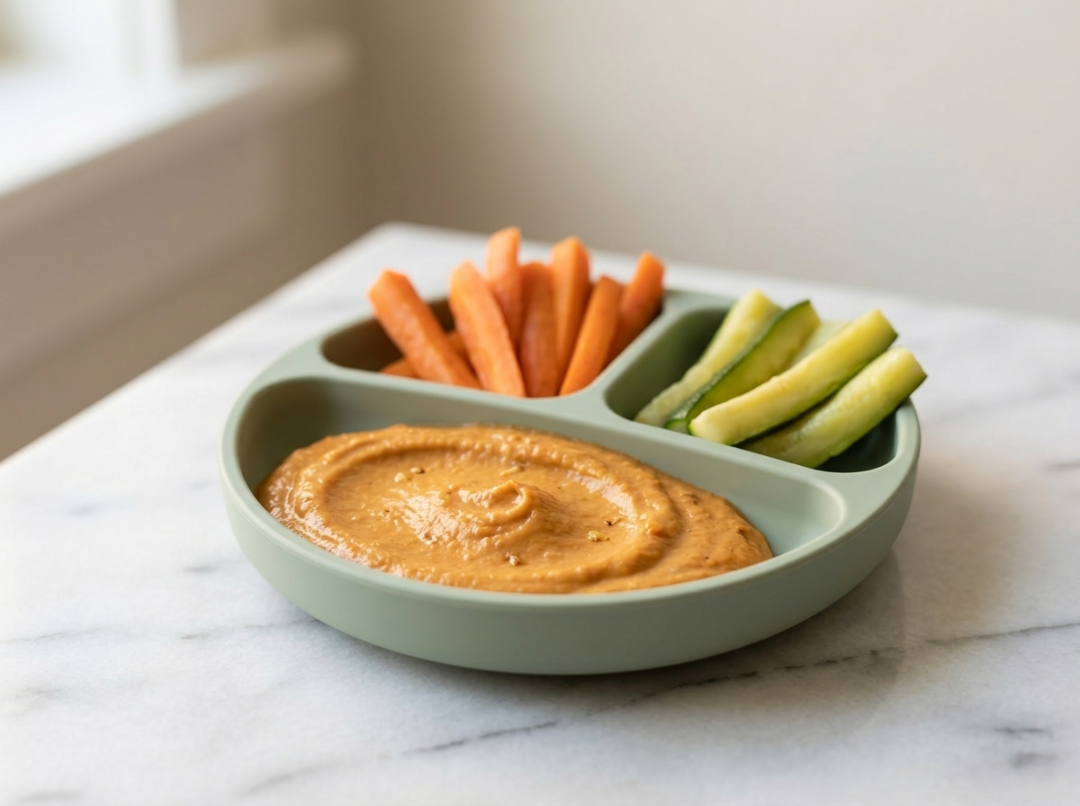
Roasted Pepper and Eggplant Dip with Soft Veggie Sticks
A delicious Balkan-inspired vegetable dip made from naturally sweet roasted red peppers, garlic, and eggplant. Served with soft steamed carrot and zucchini sticks, this colorful dish is ideal for nine-month-olds practicing dipping and self-feeding.
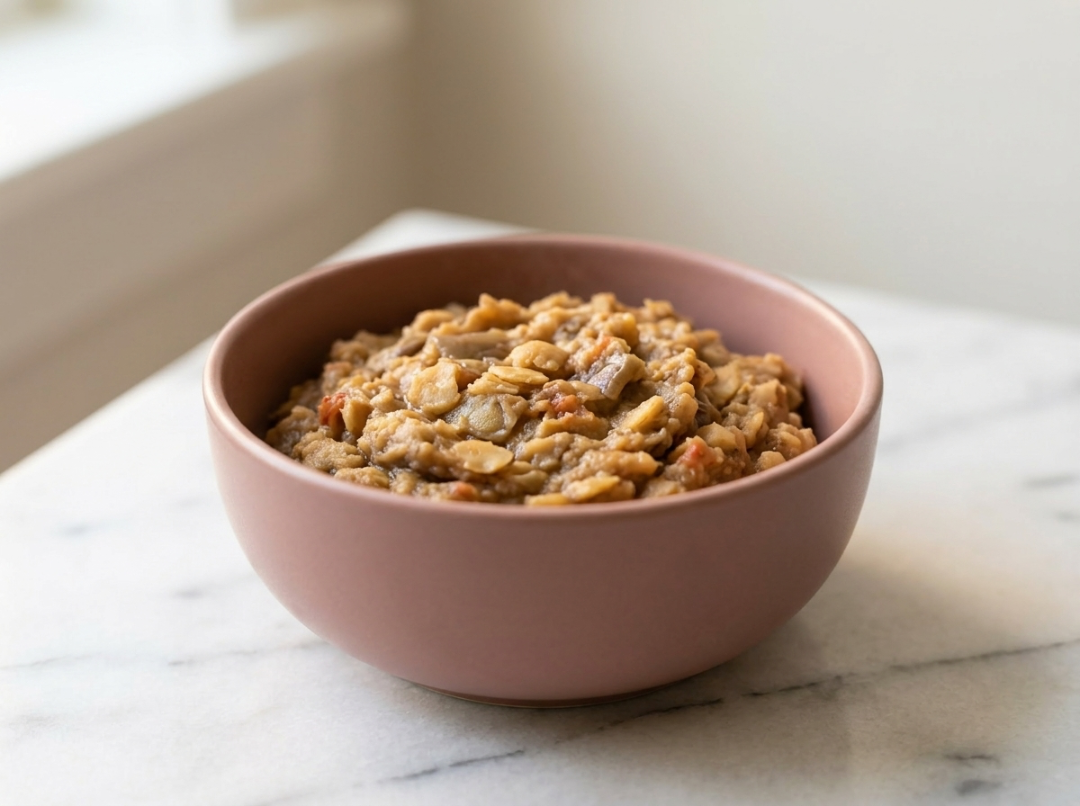
Warm Eggplant & Chickpea Mash for Baby
A soft, savory mash made with tender sautéed eggplant, fresh grated tomato, and crushed chickpeas seasoned with mild ground cumin. Specially prepared for older infants exploring textured finger foods or lumpy mashes.
Track Eggplant in the Nica app
Log foods, track reactions, and plan meals — all in one place.