When can babies eat Cream Cheese?
From 6 months
Start with: Thick, creamy, and spreadable.
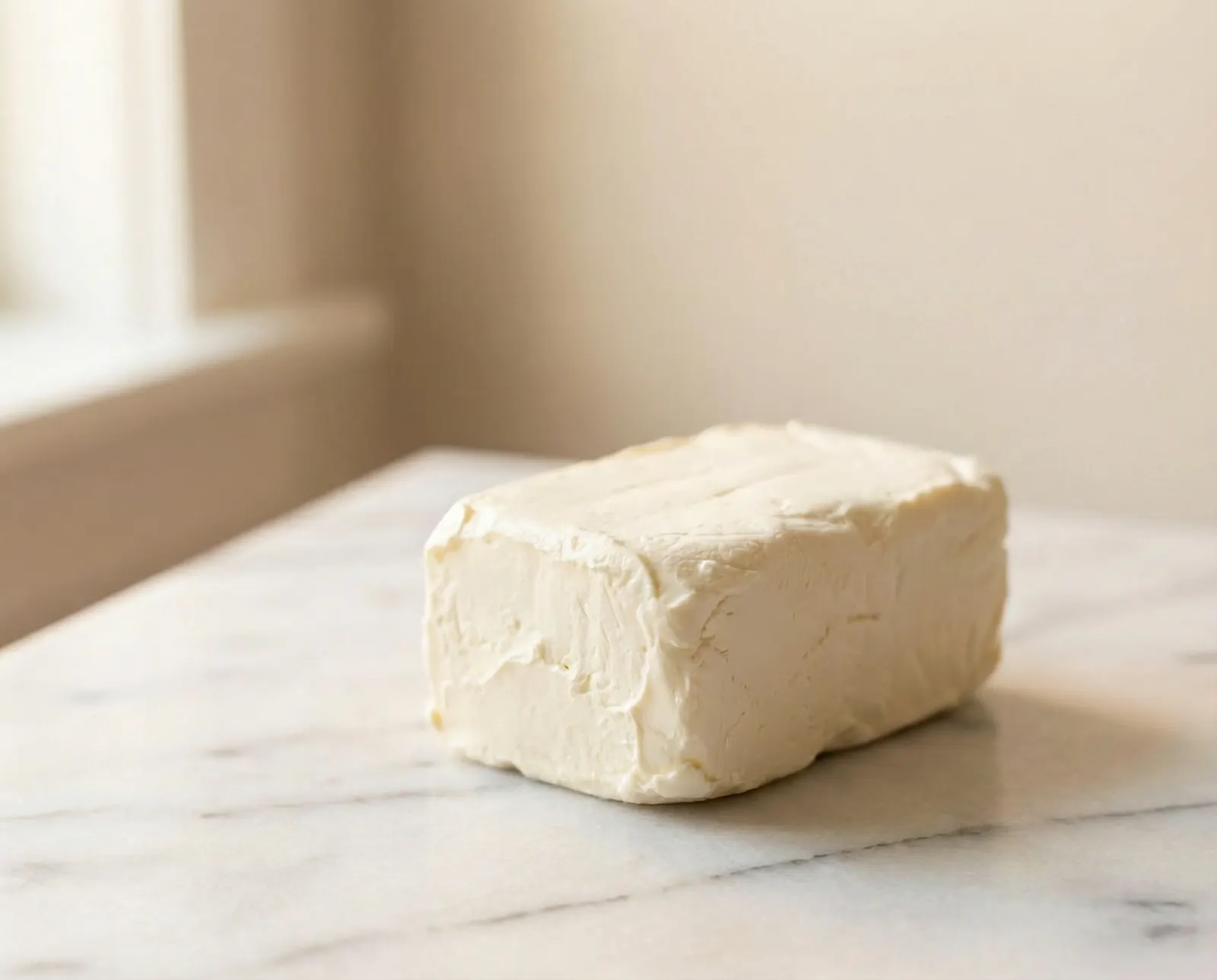
Cream cheese is a soft, mild, unripened cheese with a high fat content. It is an energy-dense food that provides Vitamin A for vision and healthy fats for brain development. Because of its spreadable texture, it is an excellent 'binding agent' to help babies manage crumbly or slippery foods during the early stages of self-feeding.
How to serve Cream Cheese, by age
- 6mo
From 6 months: Thick, creamy, and spreadable.
Serve thinly spread on a 'teething wafer' or a soft strip of crustless bread. You can also whisk a teaspoon of cream cheese into warm vegetable purees (like beet or carrot) to add a creamy texture and boost the calorie count. Ensure it is spread thinly so it doesn't become a sticky glob in the baby's mouth.
- 9mo
From 9 months: Soft and sticky.
Use cream cheese as a dip for soft-cooked vegetable sticks. It is also perfect for making 'pinwheels'—spread cream cheese on a thin wrap or soft bread, roll it up, and cut into very thin slices. This helps the baby practice their pincer grasp while enjoying a variety of textures.
- 12mo
From 12 months: Various creamy consistencies.
Toddlers can enjoy cream cheese on whole-grain crackers or bagels. You can mix in finely chopped herbs like chives or even a little mashed fruit for a healthy spread. At this stage, it serves as a great high-energy snack to keep them fueled between meals.
Choking risk & safe preparation
Low choking risk
While soft, cream cheese is very sticky. If served in large globs, it can stick to the roof of the mouth or back of the throat, causing gagging. Always spread it thinly on bread or crackers. Avoid 'low-fat' versions which often contain more stabilizers and gums to maintain texture.
Allergen information
This is one of the common childhood allergens. Introduce it on its own and watch for a reaction before mixing it with new foods.
Contains or relates to these allergens:
- Milk
Nutrition & benefits
Contains 300mcg of Vitamin A, which is essential for healthy vision and a strong immune system. Its high fat content (34g per 100g) provides the dense energy required for the rapid myelination of the infant brain.
- Eye Health
Per 100 g
- Energy
- 350kcal
- Protein
- 6.2g
- Fat
- 34.4g
- Fiber
- 0g
- Iron
- 0.1mg
- Vitamin C
- 0mg
See all nutrients (25)
Macronutrients
- Energy
- 350 kcal
- Protein
- 6.2 g
- Carbohydrates
- 5.5 g
- Fat
- 34.4 g
Key Minerals
- Iron
- 0.1 mg
- Calcium
- 97 mg
- Zinc
- 0.5 mg
- Sodium
- 314 mg
- Potassium
- 132 mg
- Magnesium
- 9 mg
- Phosphorus
- 107 mg
- Selenium
- 8.6 mcg
- Copper
- < 0.1 mg
- Manganese
- < 0.1 mg
Vitamins
- Vitamin A
- 308 mcg
- Vitamin C
- 0 mg
- Vitamin D
- 0 mcg
- Vitamin B6
- < 0.1 mg
- Vitamin B12
- 0.2 mcg
- Vitamin E
- 0.9 mg
- Vitamin K
- 2.1 mcg
- Folate
- 9 mcg
- Thiamin (B1)
- < 0.1 mg
- Choline
- 26.8 mg
Other
- Fiber
- 0 g
Source: USDA FoodData Central
Pairs well with
Recipes with Cream Cheese
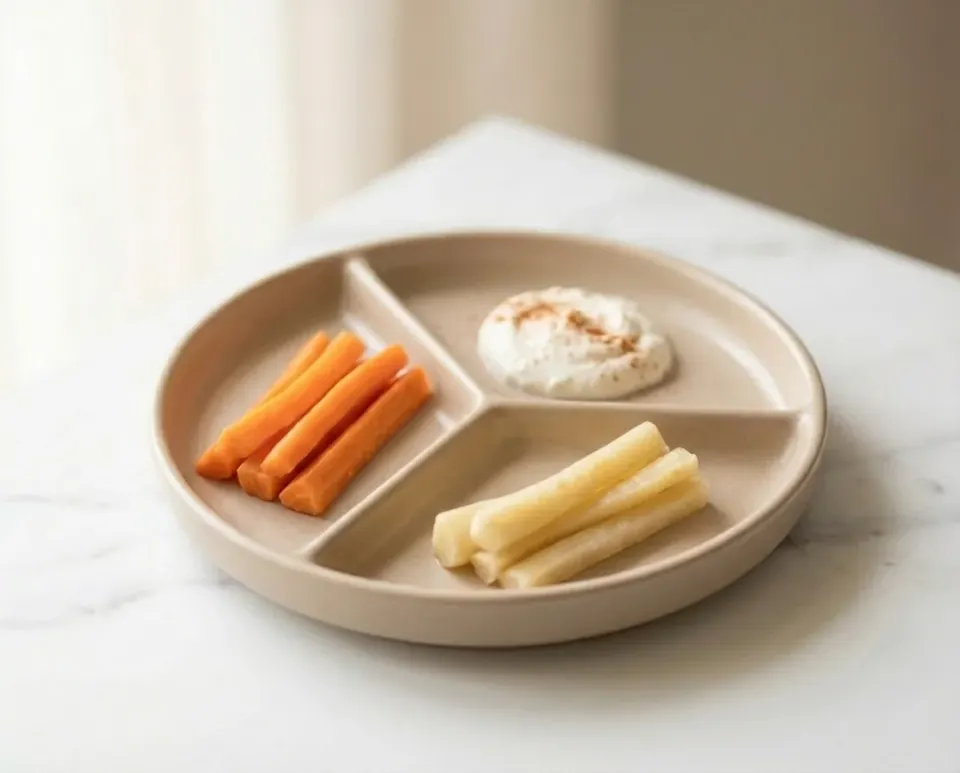
Carrot & Parsnip Sticks with Cream Cheese Dip
Steamed root vegetable sticks served with a simple cream cheese dip. Carrots and parsnips become wonderfully soft when steamed, making them perfect first finger foods. Parsnips have a naturally sweet flavour that most babies love.
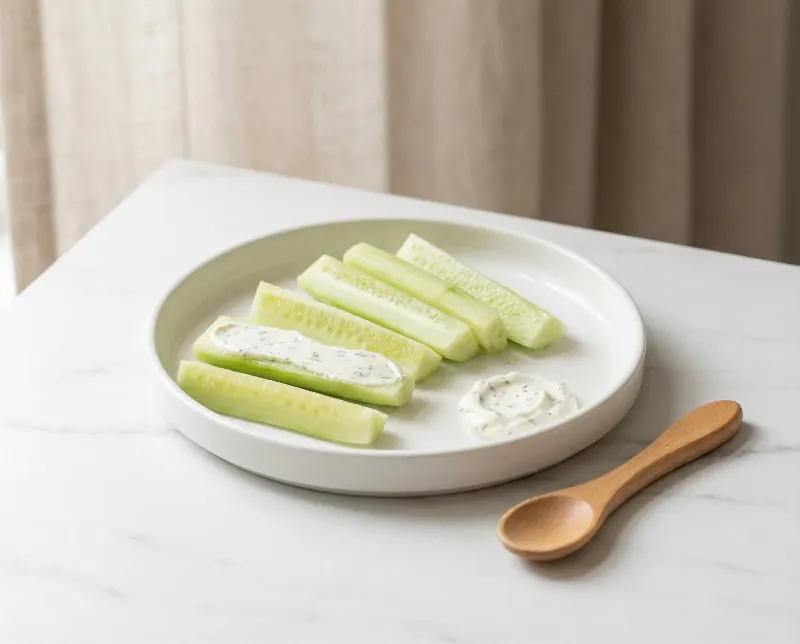
Cool Cucumber Sticks with Cream Cheese
A refreshing and hydrating snack that is perfect for teething babies. Peeled and de-seeded cucumber sticks are served with a spread of smooth cream cheese, providing a mix of cool textures and healthy fats.
Frequently asked
Is cream cheese too salty for babies?
Cream cheese has moderate sodium (approx 320mg/100g), which is lower than Cheddar but higher than Ricotta. When used as a thin spread, it is perfectly safe for babies. Just avoid highly processed 'flavored' spreads which often have added salt and sugar.
Can I use 'Light' cream cheese?
No. Babies under 2 years old need full-fat dairy. 'Light' versions replace healthy fats with additives and water, which doesn't help your baby's growth or brain development.

Track Cream Cheese in the Nica app
Log foods, track reactions, and plan meals — all in one place.

