When can babies eat Pineapple?
Safe from: 6 months
Common allergen: No
Choking risk: Moderate
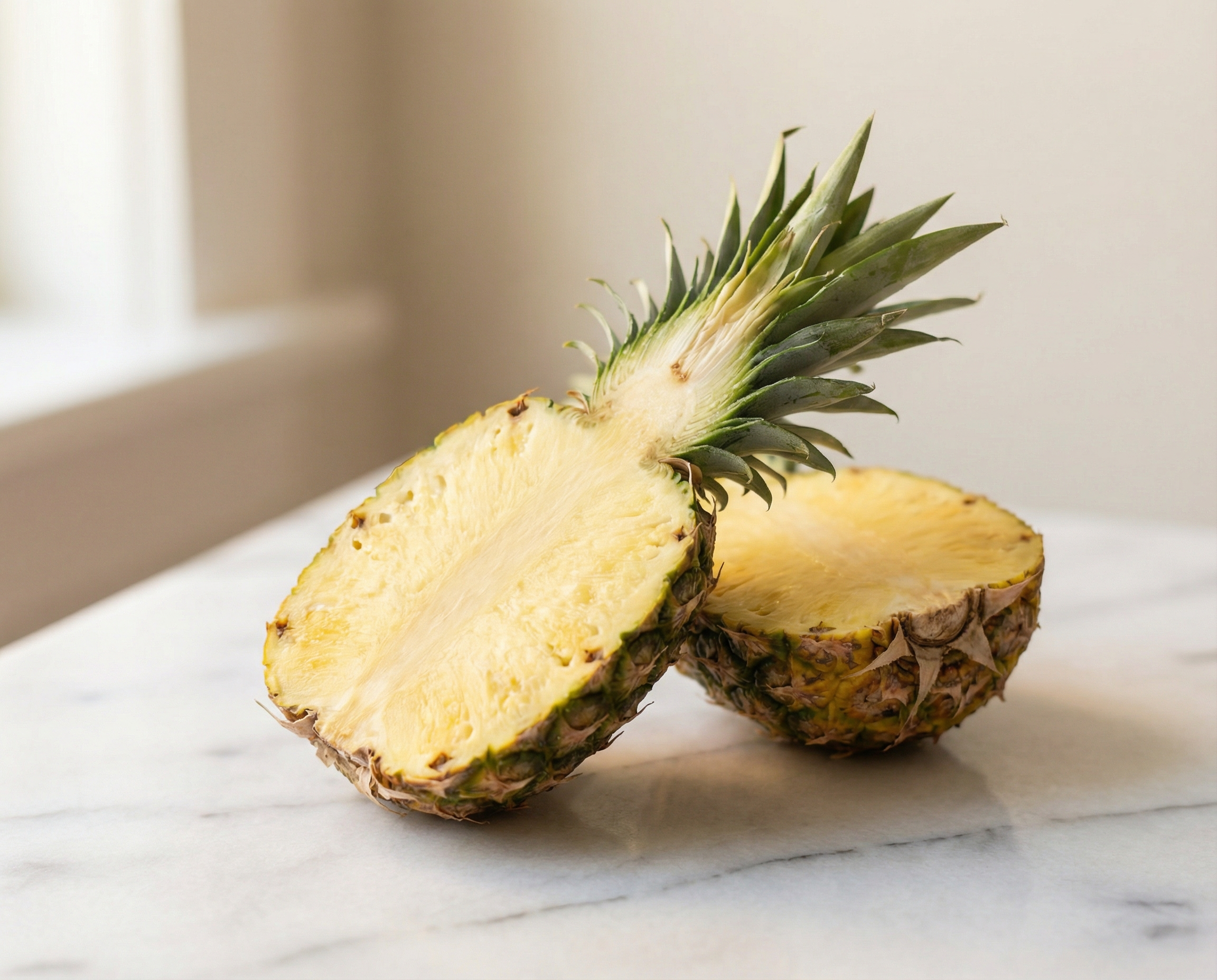
Pineapple is rich in Vitamin C, Manganese, and an enzyme called bromelain, which helps break down proteins and supports digestion. Because it is fibrous and acidic, it requires careful preparation—specifically removing the hard core, to ensure it is safe and comfortable for your baby to eat.
Age guide
| Stage | Min age | Serving | Texture |
|---|---|---|---|
| 6m+ | 6m | Serve as a very smooth puree (strained if it remains stringy) or as a large, long ring/wedge for the baby to suck on. For BLW, ensure the hard inner core and all 'eyes' are removed. The large wedge allows them to explore the flavor without swallowing a tough chunk. | Smooth puree or large, core-free wedges. |
| 9m+ | 9m | Offer finely diced or crushed pineapple (core-free). As your baby develops their pincer grasp, smaller pieces are great, but ensure they are very soft. If the pineapple is too firm, steam it for a few minutes to soften the fibers before serving. | Small, soft, finely diced pieces. |
| 12m+ | 12m | Serve as bite-sized chunks or rings. At this stage, toddlers can usually handle the natural texture of raw pineapple. It pairs perfectly with yogurt, cottage cheese, or as a topping for grilled chicken. | Bite-sized chunks. |
Pairs well with
Frequently asked
Track Pineapple in the Nica app
Log foods, track reactions, and plan meals — all in one place.