When can babies eat Papaya?
Safe from: 6 months
Common allergen: No
Choking risk: Moderate
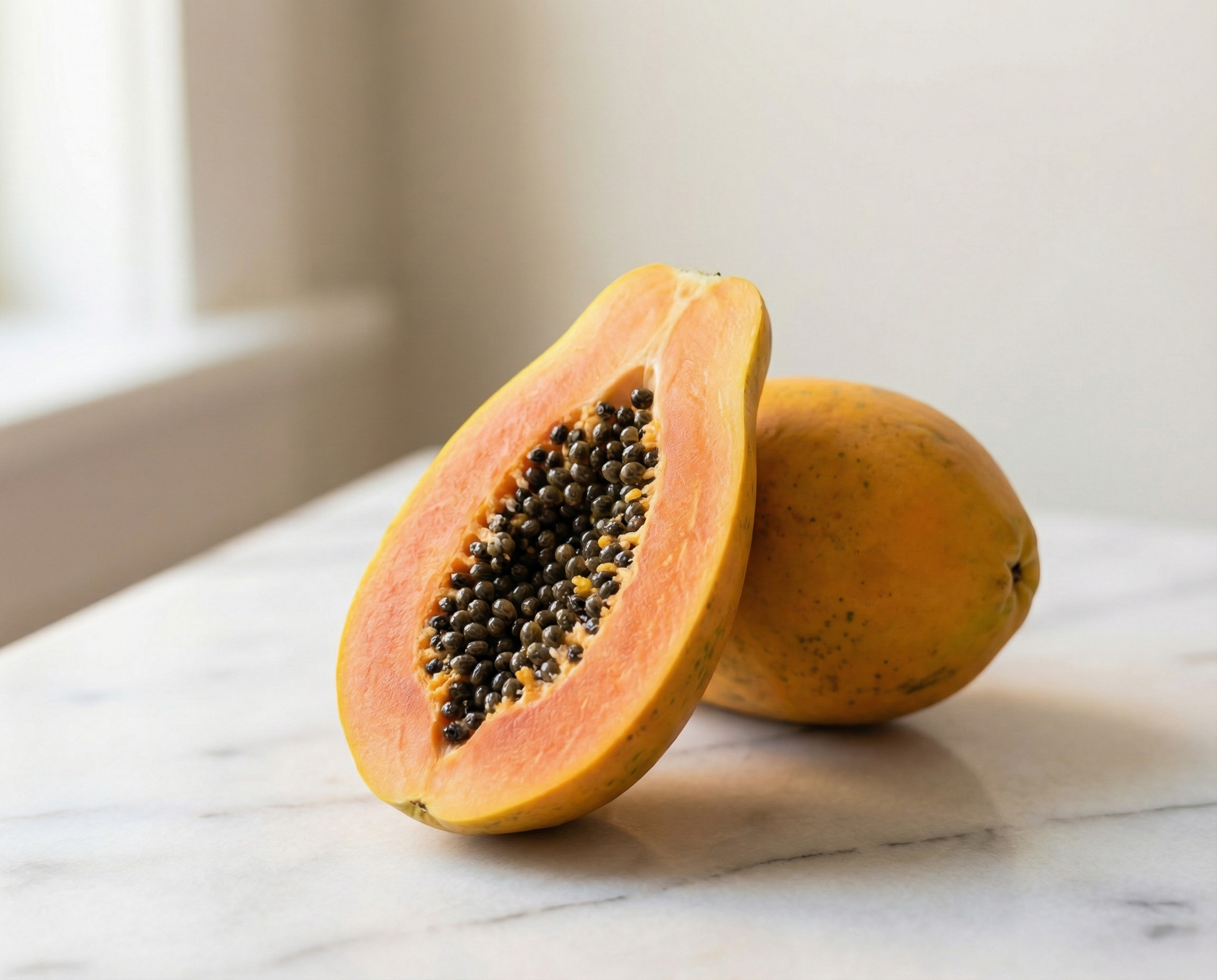
Papaya is a nutrient-dense tropical fruit famous for the digestive enzyme 'papain.' It is exceptionally high in Vitamin C and Vitamin A, supporting both the immune system and eye development. Its soft, buttery texture when ripe makes it an ideal first fruit for babies.
Age guide
| Stage | Min age | Serving | Texture |
|---|---|---|---|
| 6m+ | 6m | Serve as a smooth puree or a large, long wedge (rind-free). Ensure the papaya is very ripe (skin should be mostly yellow/orange and yield to pressure). For BLW, a large spear is great, but because it is slippery, you can coat it in almond flour or ground oats to help your baby grip it. | Silky puree or large, soft spears. |
| 9m+ | 9m | Offer small, bite-sized cubes. Ensure all the black seeds are removed as they are a choking hazard and have a strong, bitter taste. Papaya cubes are a wonderful way for babies to practice their pincer grasp. | Small, soft, seedless cubes. |
| 12m+ | 12m | Serve as chunks or slices. Papaya pairs perfectly with a squeeze of lime or mixed into yogurt. It can also be mashed and spread on toast as a nutritious alternative to jam. | Bite-sized chunks or thick slices. |
Pairs well with
Frequently asked
Track Papaya in the Nica app
Log foods, track reactions, and plan meals — all in one place.