When can babies eat Green Lentils?
From 6 months
Start with: Smooth, strained puree.
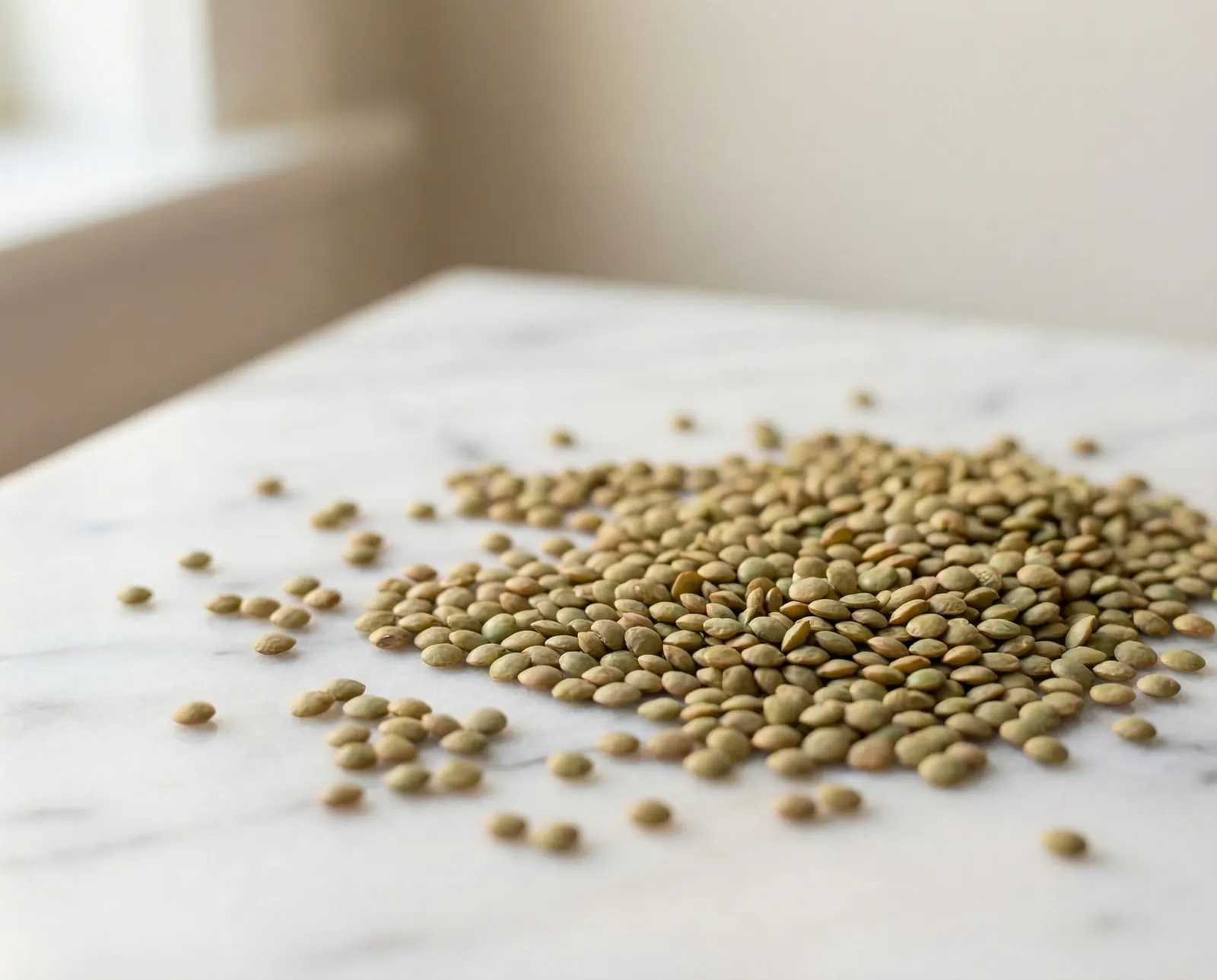
Green lentils (including French/Puy lentils) are nutrient-dense legumes that keep their shape when cooked. They are an exceptional source of plant-based protein, iron, and fiber. Unlike red lentils, they have an outer skin that provides important prebiotics for gut health, though they require longer cooking times to ensure they are soft enough for an infant.
How to serve Green Lentils, by age
- 6mo
From 6 months: Smooth, strained puree.
Not the ideal first legume due to the skin. If serving, cook until extremely soft (well past the 'al dente' stage for adults) and blend into a completely smooth puree. The skin can be harder for a 6-month-old's gut to process, so introduce in very small amounts to monitor for gas or discomfort.
- 9mo
From 9 months: Soft, smashable whole grains.
Serve overcooked so they smash easily between your fingers. Green lentils are fantastic for practicing the pincer grasp. Offer them as individual 'grains' or mixed into a moist dish like a thick vegetable stew. Because they hold their shape, they provide a great sensory experience for babies learning to chew skins.
- 12mo
From 12 months: Whole, tender lentils.
Toddlers can eat green lentils in soups, salads, or mixed with rice and grains. They are an excellent meat substitute. To aid digestion, ensure they are always cooked with aromatics like garlic or ginger, and continue to pair with Vitamin C (like citrus or peppers) to unlock the plant-based iron.
Choking risk & safe preparation
Low choking risk
Green lentils are generally safe, but if undercooked, the skin can be tough and cause gagging. Always ensure you can smash a cooked lentil effortlessly between two fingers. Avoid serving them in a dry, loose form; mix with a sauce or puree to prevent aspiration (inhaling the small grain).
Allergen information
Not a common childhood allergen. Reactions are possible with any food, so introduce it on its own first.
Nutrition & benefits
Green lentils contain even more fiber (11g) than red lentils due to the intact skin. This fiber acts as a prebiotic, feeding the beneficial bacteria in the baby's gut. They are an iron powerhouse, providing roughly 3.3mg of iron per 100g.
- Digestion-friendly
Per 100 g
- Energy
- 352kcal
- Protein
- 24.6g
- Fat
- 1.1g
- Fiber
- 10.7g
- Iron
- 6.5mg
- Vitamin C
- 4.5mg
See all nutrients (25)
Macronutrients
- Energy
- 352 kcal
- Protein
- 24.6 g
- Carbohydrates
- 63.4 g
- Fat
- 1.1 g
Key Minerals
- Iron
- 6.5 mg
- Calcium
- 35 mg
- Zinc
- 3.3 mg
- Sodium
- 6 mg
- Potassium
- 677 mg
- Magnesium
- 47 mg
- Phosphorus
- 281 mg
- Selenium
- 0.1 mcg
- Copper
- 0.8 mg
- Manganese
- 1.4 mg
Vitamins
- Vitamin A
- 2 mcg
- Vitamin C
- 4.5 mg
- Vitamin D
- 0 mcg
- Vitamin B6
- 0.5 mg
- Vitamin B12
- 0 mcg
- Vitamin E
- 0.5 mg
- Vitamin K
- 5 mcg
- Folate
- 479 mcg
- Thiamin (B1)
- 0.9 mg
- Choline
- 96.4 mg
Other
- Fiber
- 10.7 g
Source: USDA FoodData Central
Pairs well with
Recipes with Green Lentils
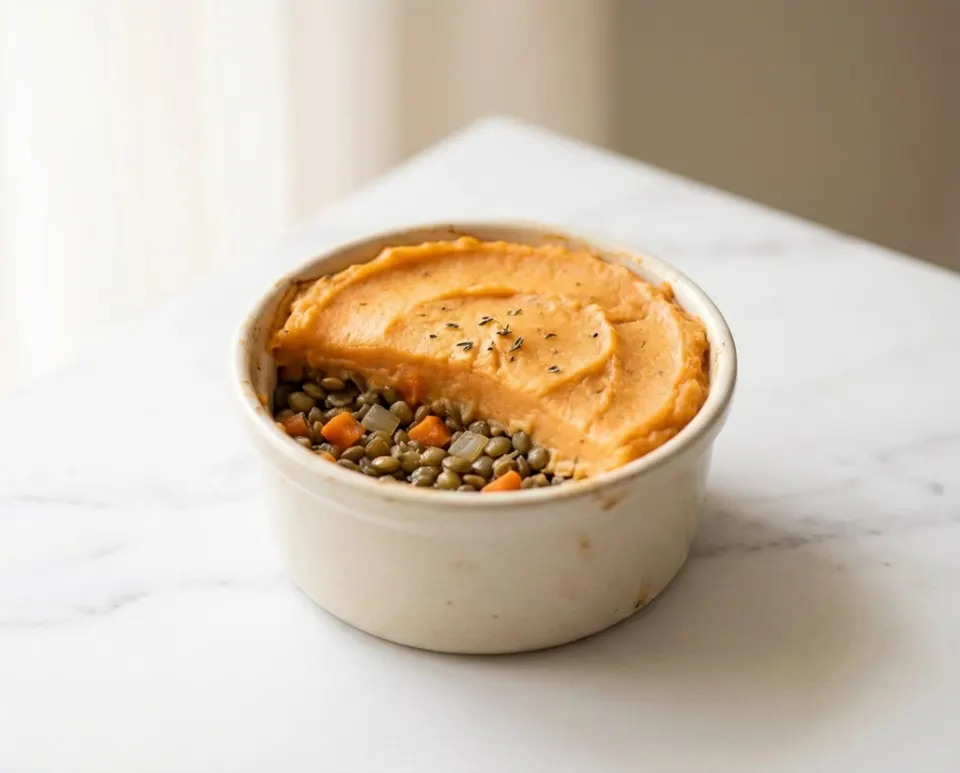
Lentil & Sweet Potato Shepherd's Pie
A comforting, plant-based twist on a classic dish that provides a wonderful source of iron and fiber. The naturally sweet potato topping is creamy and soft, making it a perfect texture for toddlers to enjoy.
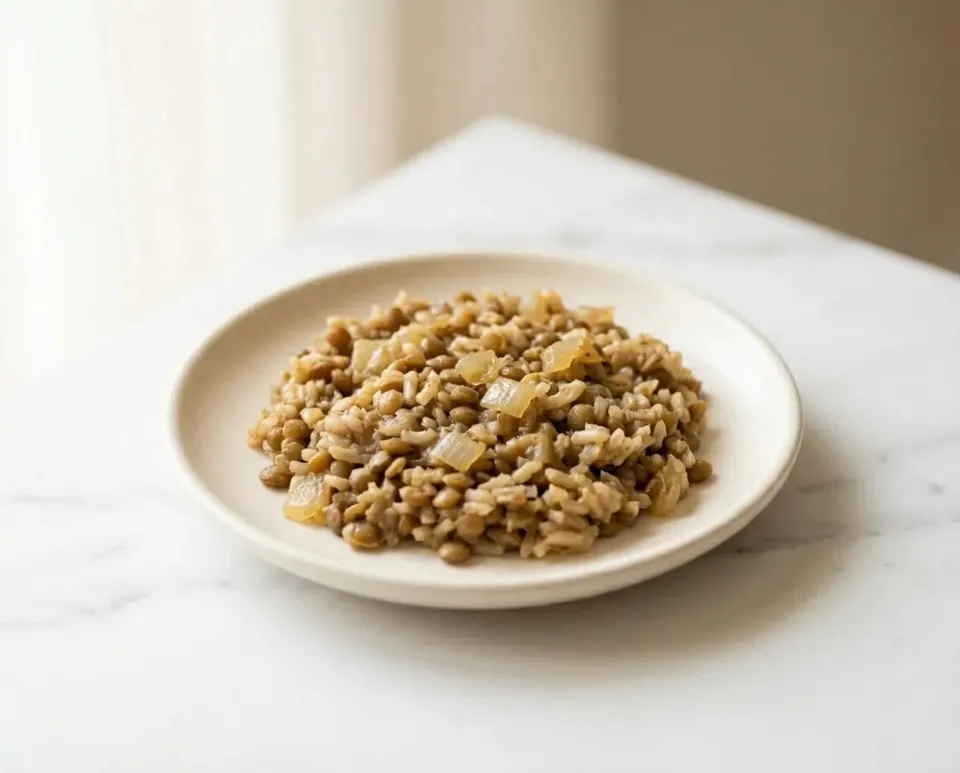
Soft Lentil & Rice Mujadara
A gentle, iron-rich Mediterranean classic made with tender lentils and rice, naturally sweetened with soft caramelized onions. This dish is perfect for toddlers as it provides a soft texture and a mild, savory flavor profile.
Frequently asked
Should I soak green lentils?
While not strictly necessary for cooking time, soaking green lentils for 2–4 hours can help reduce 'anti-nutrients' like lectins and phytic acid, making the iron easier to absorb and the lentils easier to digest (less gas).
What is the difference between Green and French (Puy) lentils?
French/Puy lentils are a type of green lentil that is smaller and holds its shape even better. They are highly nutritious but require very thorough cooking for babies to ensure the skins aren't too 'snappy'.

Track Green Lentils in the Nica app
Log foods, track reactions, and plan meals — all in one place.

