When can babies eat Yellow Bell Pepper?
Safe from: 6 months
Common allergen: No
Choking risk: Moderate
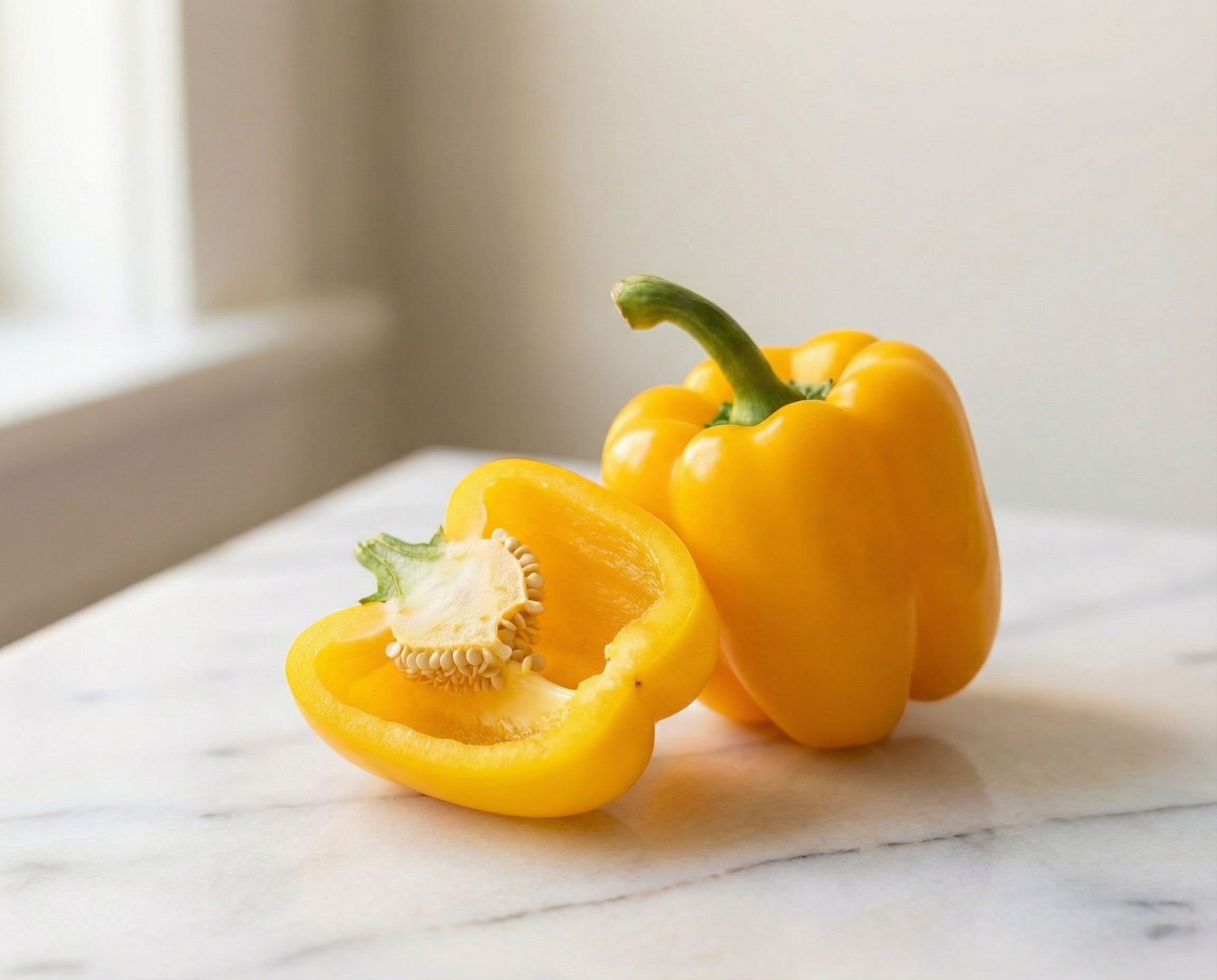
Yellow bell peppers are a fantastic source of energy and immunity, containing even more Vitamin C than the red variety in some cases. They provide a mild, fruity sweetness that babies love. Rich in antioxidants like violaxanthin and lutein, they are essential for protecting developing vision and boosting iron absorption from other foods.
Age guide
| Stage | Min age | Serving | Texture |
|---|---|---|---|
| 6m+ | 6m | Serve as a smooth, seedless puree. For Baby-Led Weaning (BLW), roast the pepper until the skin blisters, peel it off, and offer wide strips. Roasting concentrates the sugars and ensures the texture is soft enough to be mashed by the gums without the risk of the thin skin sticking to the throat. | Velvety puree or buttery-soft roasted strips (skinless). |
| 9m+ | 9m | Offer finely diced, cooked yellow pepper. You can stir it into soft polenta, quinoa, or scrambled eggs. The bright yellow color is visually stimulating for babies at this age. Ensure it is cooked until tender so the skin is not a distraction or a gagging trigger. | Small, tender, well-cooked dices. |
| 12m+ | 12m | Toddlers can try raw yellow pepper cut into very thin 'matchsticks'. Its crunchy, watery texture is refreshing. It can also be diced into a fresh salsa with cucumber and avocado. Yellow peppers are generally less bitter than green, making them easier to accept raw. | Soft chunks or thin, crunchy raw strips. |
Pairs well with
Frequently asked
Recipes with Yellow Bell Pepper
Track Yellow Bell Pepper in the Nica app
Log foods, track reactions, and plan meals — all in one place.