When can babies eat Watermelon?
Safe from: 6 months
Common allergen: No
Choking risk: Moderate
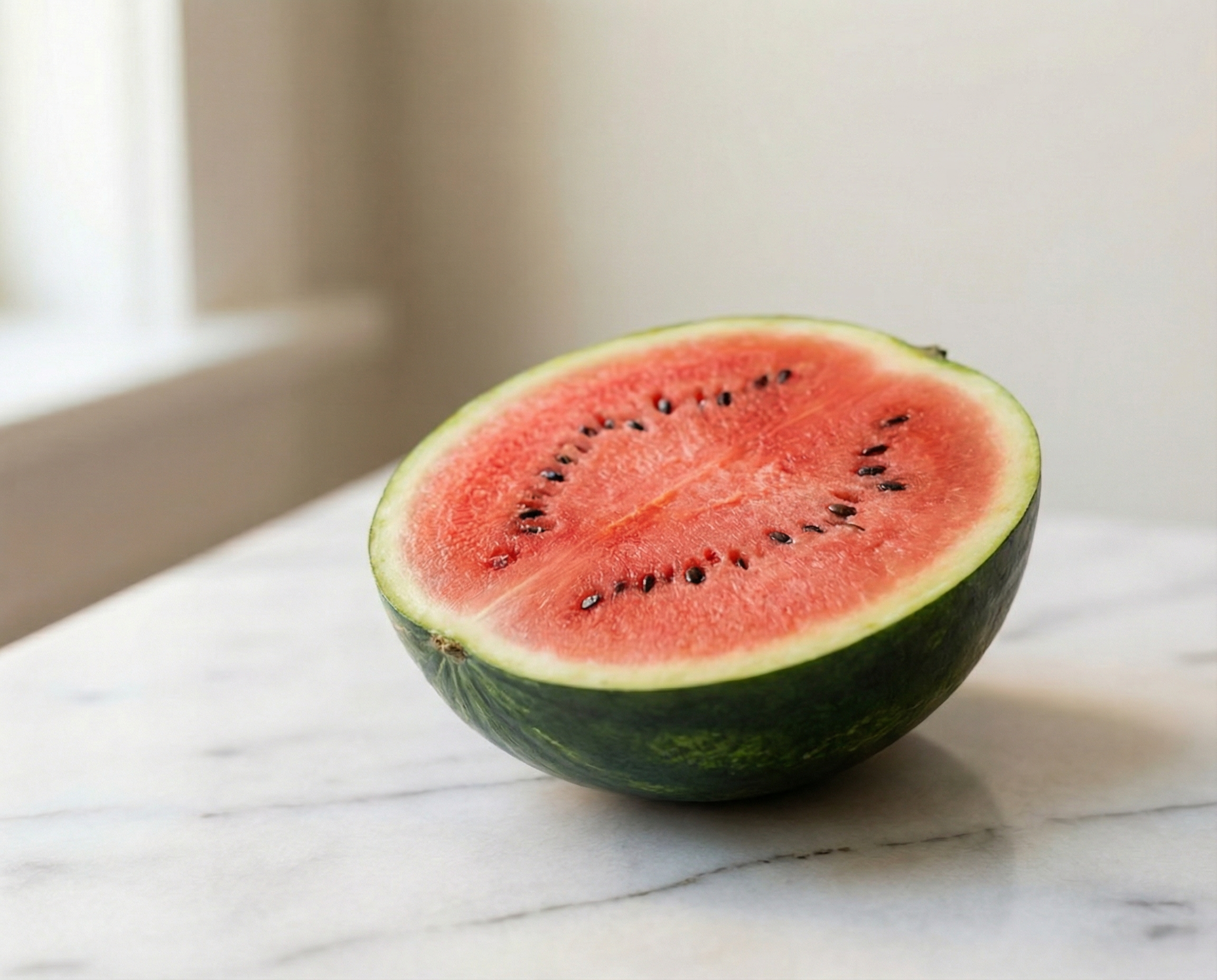
Watermelon is an incredibly hydrating fruit, perfect for warm weather. It is a good source of Lycopene (an antioxidant for heart health) and Vitamin A. While soft, its high water content and slippery texture mean it should be served with care to ensure the baby can manage the pieces.
Age guide
| Stage | Min age | Serving | Texture |
|---|---|---|---|
| 6m+ | 6m | Serve as a very thin puree or a large, rectangular rind-free wedge (the size of two adult fingers) for the baby to suck on. Ensure all seeds (black and white) are removed. The large wedge allows the baby to explore the flavor without a small piece breaking off in the back of the throat. | Thin liquid-puree or large, firm-but-juicy wedges. |
| 9m+ | 9m | Offer small, bite-sized cubes with all seeds removed. At this stage, babies are practicing their pincer grasp, but because watermelon is slippery, they may still find it easier to use their whole hand. You can also mix small pieces into plain yogurt. | Small, seedless cubes. |
| 12m+ | 12m | Serve as larger chunks or wedges. You can leave a small piece of the rind on to act as a 'handle,' but supervise closely to ensure the baby doesn't bite off the tough green part. Watermelon stars (cut with a cookie cutter) are a fun way to encourage eating. | Chunks or wedges with optional rind handle. |
Pairs well with
Frequently asked
Recipes with Watermelon
Track Watermelon in the Nica app
Log foods, track reactions, and plan meals — all in one place.