When can babies eat Walnuts?
Safe from: 6 months
Common allergen: Yes
Choking risk: High
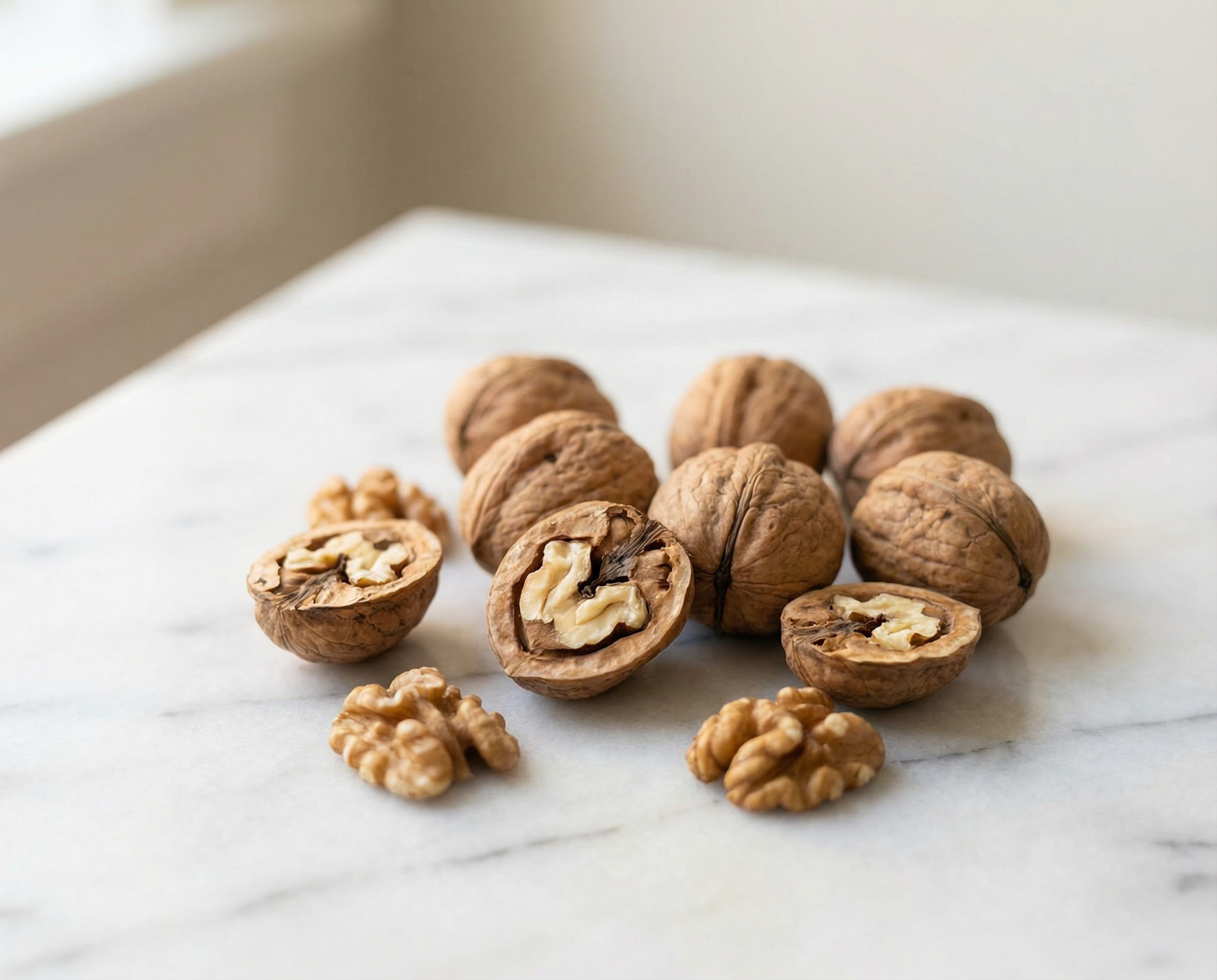
Walnuts are powerhouses of brain-building Omega-3 fatty acids and antioxidants. They provide essential fats for neurological development and are a good source of plant-based protein. Due to their hard, irregular shape, whole walnuts or even large pieces are a major choking hazard and must be finely ground or turned into smooth butter for infants.
Age guide
| Stage | Min age | Serving | Texture |
|---|---|---|---|
| 6m+ | 6m | Serve ONLY as a finely ground powder or as smooth walnut butter thinned with water or breast milk. Stir 1/2 teaspoon of the thinned mixture into purees like banana, sweet potato, or yogurt. Introduce as a single allergen and monitor for reactions for 3-5 days before introducing other new foods. | Fine powder or thinned, liquid spread. |
| 9m+ | 9m | Sprinkle walnut 'meal' (finely ground walnuts) onto finger foods like steamed broccoli or avocado to add texture and nutrients. You can also mix walnut butter into a dip made of mashed beans or yogurt. Ensure the consistency is thin enough that it doesn't stick to the roof of the mouth. | Grainy meal or smooth, thin spread. |
| 12m+ | 12m | Toddlers can enjoy walnut butter on thin strips of toast. You can also use ground walnuts in baking (muffins or pancakes). Continue to avoid whole walnuts or large chunks until at least age 4. If serving pieces, they must be smaller than the size of a pea and mixed into soft foods. | Fine meal or thinned spread. |
Pairs well with
Frequently asked
Recipes with Walnuts
Track Walnuts in the Nica app
Log foods, track reactions, and plan meals — all in one place.