When can babies eat Prune?
From 6 months
Start with: Smooth, thick puree.
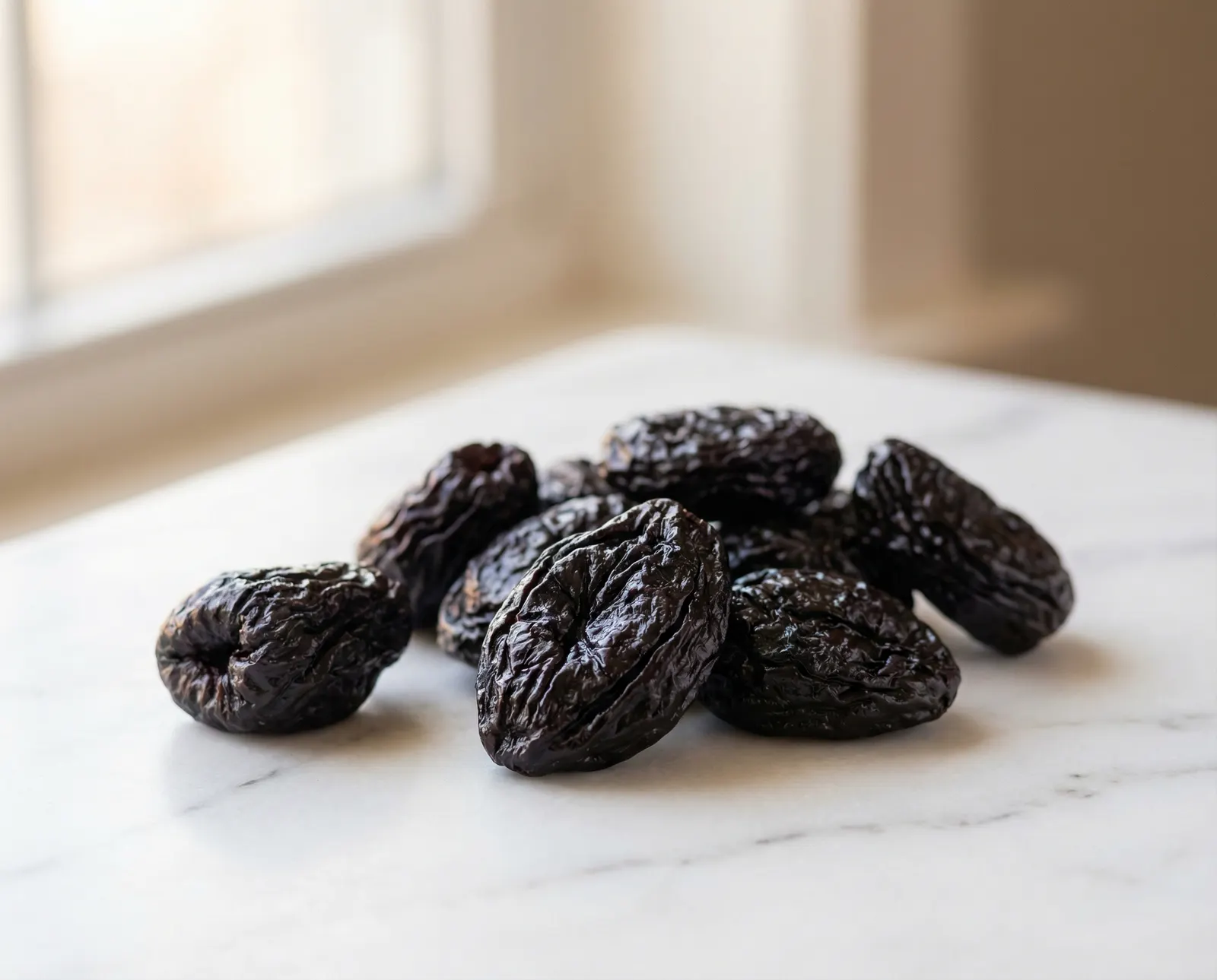
Prunes are dried plums and are the world's most famous natural remedy for baby constipation. They are exceptionally high in fiber and sorbitol, a sugar alcohol that draws water into the intestines to soften stool. They are also a surprisingly good source of iron and Vitamin K.
How to serve Prune, by age
- 6mo
From 6 months: Smooth, thick puree.
Never serve whole. Prepare as a smooth puree by soaking prunes in hot water for 10-15 minutes until very soft, then blending. You can mix this puree into infant cereal or yogurt. One to two tablespoons is usually enough to help with digestion.
- 9mo
From 9 months: Minced, softened pieces or puree.
Continue with purees or offer very finely minced, soaked prunes stirred into oatmeal. The texture should be soft and paste-like. Avoid offering whole prunes as they are too sticky and difficult for a 9-month-old to chew safely.
- 12mo
From 12 months: Small, softened bite-sized bits.
At this stage, you can offer small, bite-sized pieces of soaked prunes. Ensure they are pitted and soft. Whole prunes can still be a choking hazard due to their leathery skin and sticky texture, so cutting them into small bits is safest.
Choking risk & safe preparation
High choking risk
Whole prunes are a significant choking hazard because they are sticky, leathery, and often contain a sharp pit. Always use 'pitted' prunes and soak them to soften the texture before serving to babies and toddlers.
Allergen information
Not a common childhood allergen. Reactions are possible with any food, so introduce it on its own first.
Nutrition & benefits
Powerhouse of Potassium and Vitamin K. Contains sorbitol, which naturally draws water into the colon to ease bowel movements.
- Digestion-friendly
Per 100 g
- Energy
- 240kcal
- Protein
- 2.2g
- Fat
- 0.4g
- Fiber
- 7.1g
- Iron
- 0.9mg
- Vitamin C
- 0.6mg
See all nutrients (25)
Macronutrients
- Energy
- 240 kcal
- Protein
- 2.2 g
- Carbohydrates
- 63.9 g
- Fat
- 0.4 g
Key Minerals
- Iron
- 0.9 mg
- Calcium
- 43 mg
- Zinc
- 0.4 mg
- Sodium
- 2 mg
- Potassium
- 732 mg
- Magnesium
- 41 mg
- Phosphorus
- 69 mg
- Selenium
- 0.3 mcg
- Copper
- 0.3 mg
- Manganese
- 0.3 mg
Vitamins
- Vitamin A
- 39 mcg
- Vitamin C
- 0.6 mg
- Vitamin D
- 0 mcg
- Vitamin B6
- 0.2 mg
- Vitamin B12
- 0 mcg
- Vitamin E
- 0.4 mg
- Vitamin K
- 59.5 mcg
- Folate
- 4 mcg
- Thiamin (B1)
- < 0.1 mg
- Choline
- 10.1 mg
Other
- Fiber
- 7.1 g
Source: USDA FoodData Central
Pairs well with
Recipes with Prune
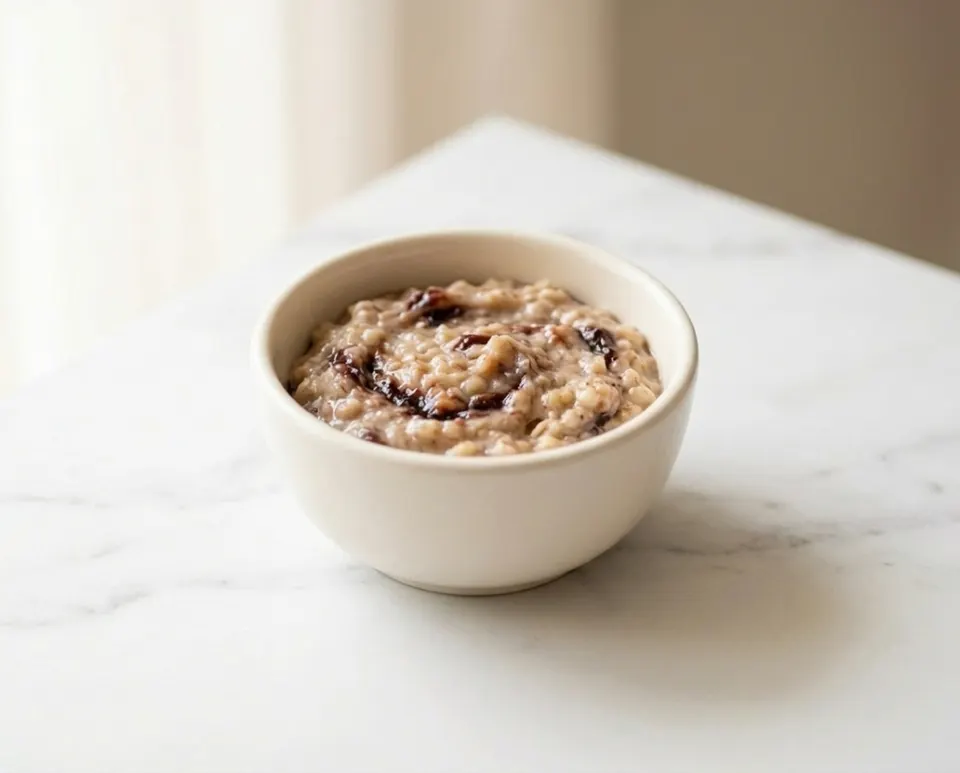
Barley & Prune Breakfast Pudding
A creamy, comforting breakfast pudding made with pearl barley, stewed prunes, and full-fat yogurt. Barley is a fiber-rich whole grain packed with B vitamins, selenium, and manganese. Prunes are one of the highest iron plant foods and naturally support healthy digestion — a common concern when babies start solids.
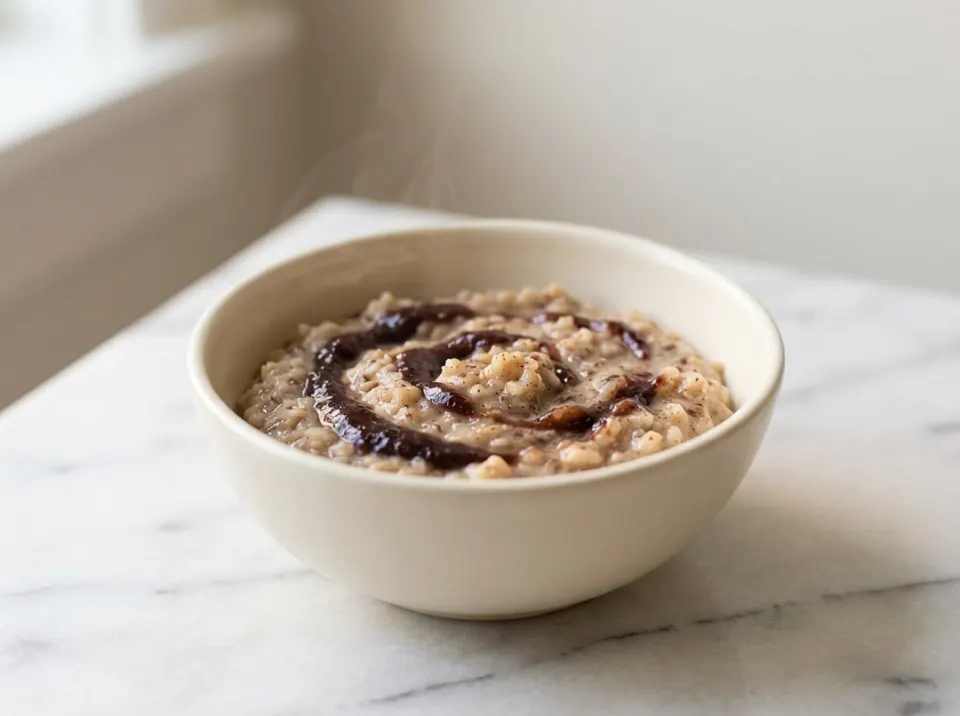
Creamy Cinnamon Rice Pudding with Soft Prune Swirl
A warm, naturally sweet breakfast porridge made from tender brown rice and ground flaxseed, paired with a gentle cinnamon-prune purée. Perfectly textured for 9-month-olds developing their pincer grasp and exploring soft lumps. High in fiber and completely allergen-free for a cozy morning start.
Frequently asked
How many prunes should I give my constipated baby?
Start with 1-2 tablespoons of puree per day. Giving too much too quickly can lead to gas, cramping, or diarrhea. Monitor your baby's reaction and adjust accordingly.
Can I give my baby prune juice?
Yes, but prune puree is generally better because it contains the fiber that juice lacks. If using juice, ensure it is 100% prune juice and limit it to 2-4 ounces a day for older infants.

Track Prune in the Nica app
Log foods, track reactions, and plan meals — all in one place.

