When can babies eat Kefir?
Safe from: 6 months
Common allergen: Yes
Choking risk: Low
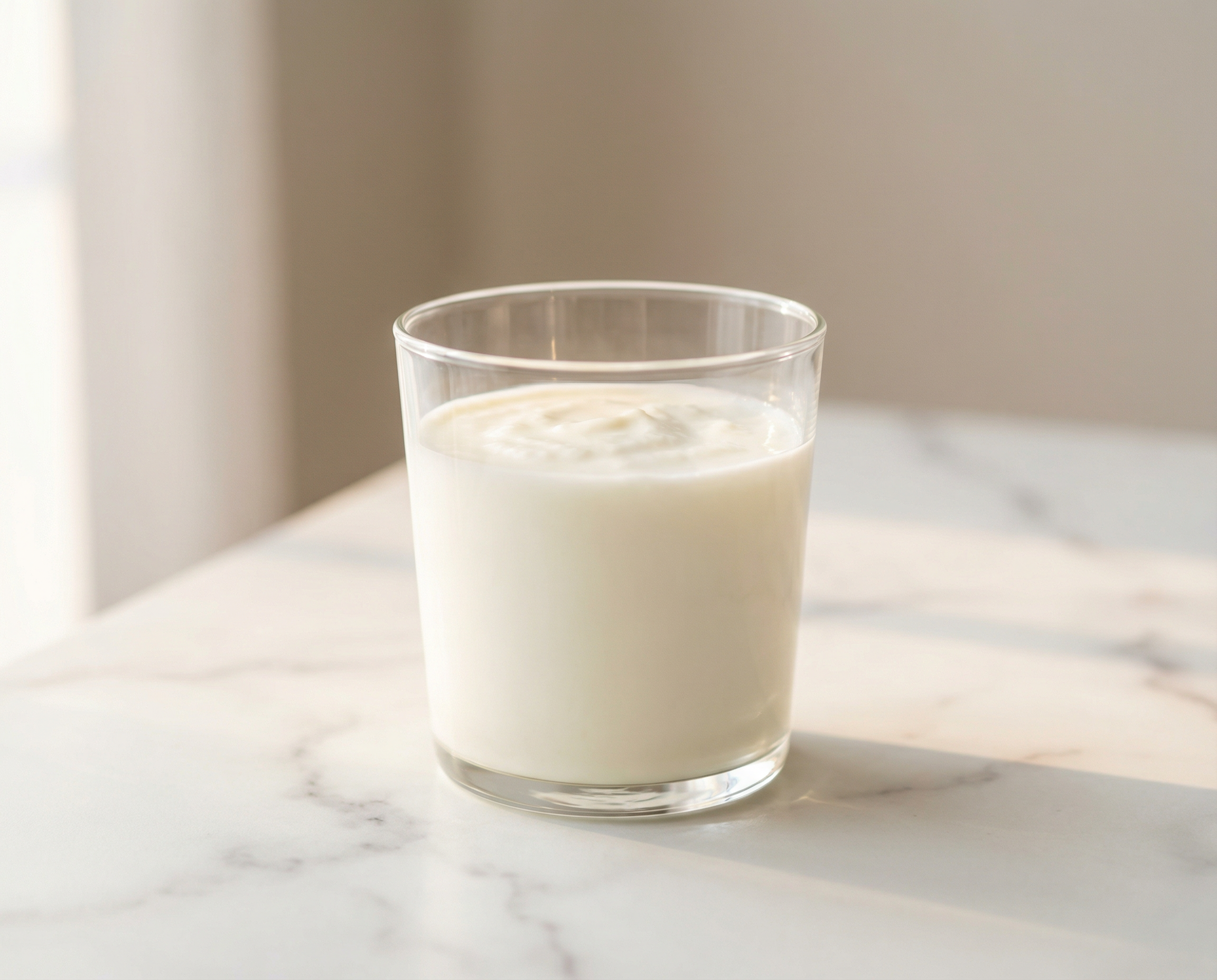
Kefir is a fermented milk drink with a thin, pourable consistency. It is superior to yogurt in its probiotic diversity, often containing over 30 different strains of beneficial bacteria and yeasts. It is rich in Calcium, Protein, and B-vitamins. Because the fermentation process breaks down almost all lactose, it is very gentle on an infant's digestive system.
Age guide
| Stage | Min age | Serving | Texture |
|---|---|---|---|
| 6m+ | 6m | Introduce slowly as a 'sip' from an open cup or mixed into purees. Start with just 1-2 teaspoons. Because it is thinner than yogurt, it is a great way to practice drinking from a cup. You can also mix it into hemp hearts or mashed banana to thicken it. Ensure it is plain and full-fat (whole milk) kefir. | Liquid, pourable, slightly 'fizzy'. |
| 9m+ | 9m | Serve in a straw cup or use as a base for 'overnight oats.' Kefir's sour tang pairs perfectly with sweet fruits like blueberries or mango. At this stage, you can use it to moisten dry foods like shredded chicken or turkey, making them easier for the baby to swallow while adding a probiotic boost. | Thin liquid. |
| 12m+ | 12m | Toddlers can enjoy 'Kefir Smoothies' mixed with spinach and fruit. It is an excellent healthy alternative to sugary milkshakes. You can also use it in pancake batter to make them extra fluffy due to the natural yeasts in the kefir. | Liquid. |
Pairs well with
Frequently asked
Track Kefir in the Nica app
Log foods, track reactions, and plan meals — all in one place.