When can babies eat Granola?
Safe from: 9 months
Common allergen: Yes
Choking risk: High
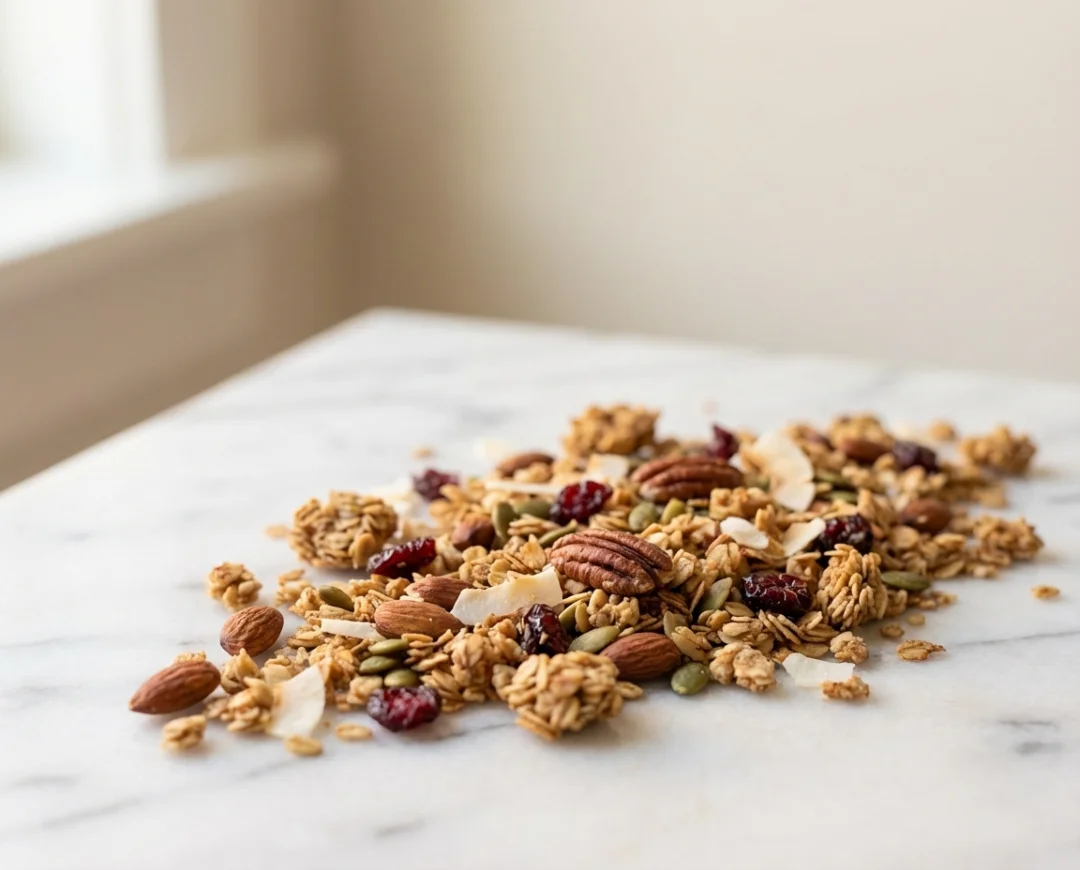
Granola is a toasted mixture of rolled oats, nuts or seeds, and sometimes dried fruit. It is an excellent source of dietary fiber and complex carbohydrates for sustained energy. For babies, homemade granola is preferred to avoid added sugars and honey. When softened in milk or yogurt, it provides a wonderful way to introduce diverse textures and healthy grains.
Age guide
| Stage | Min age | Serving | Texture |
|---|---|---|---|
| 9m+ | 9m | At 9 months, introduce granola only if it is finely ground or soaked in breast milk, formula, or yogurt until completely soft. Avoid any granola containing whole nuts, large seeds, or honey. The texture should be mushy and easy to gum, rather than crunchy or dry. | Soft, soaked mush with no hard clumps. |
| 12m+ | 12m | Toddlers can begin to explore slightly crunchier granola mixed into yogurt. Ensure that any nuts included are sliced paper-thin or crushed. You can now use honey in homemade recipes, though maple syrup or mashed bananas are still better options for sweetness. | Slightly crunchy bits mixed with moist food. |
| 18m+ | 18m | Offer granola as a topping for fruit bowls or as part of a healthy snack mix. Encourage your toddler to chew thoroughly. Monitor closely to ensure they do not stuff too much dry granola into their mouth at once, which can lead to coughing or gagging. | Crunchy clusters and grains. |
Pairs well with
Frequently asked
Recipes with Granola
Track Granola in the Nica app
Log foods, track reactions, and plan meals — all in one place.