When can babies eat Couscous?
From 6 months
Start with: Creamy, grain-free puree.
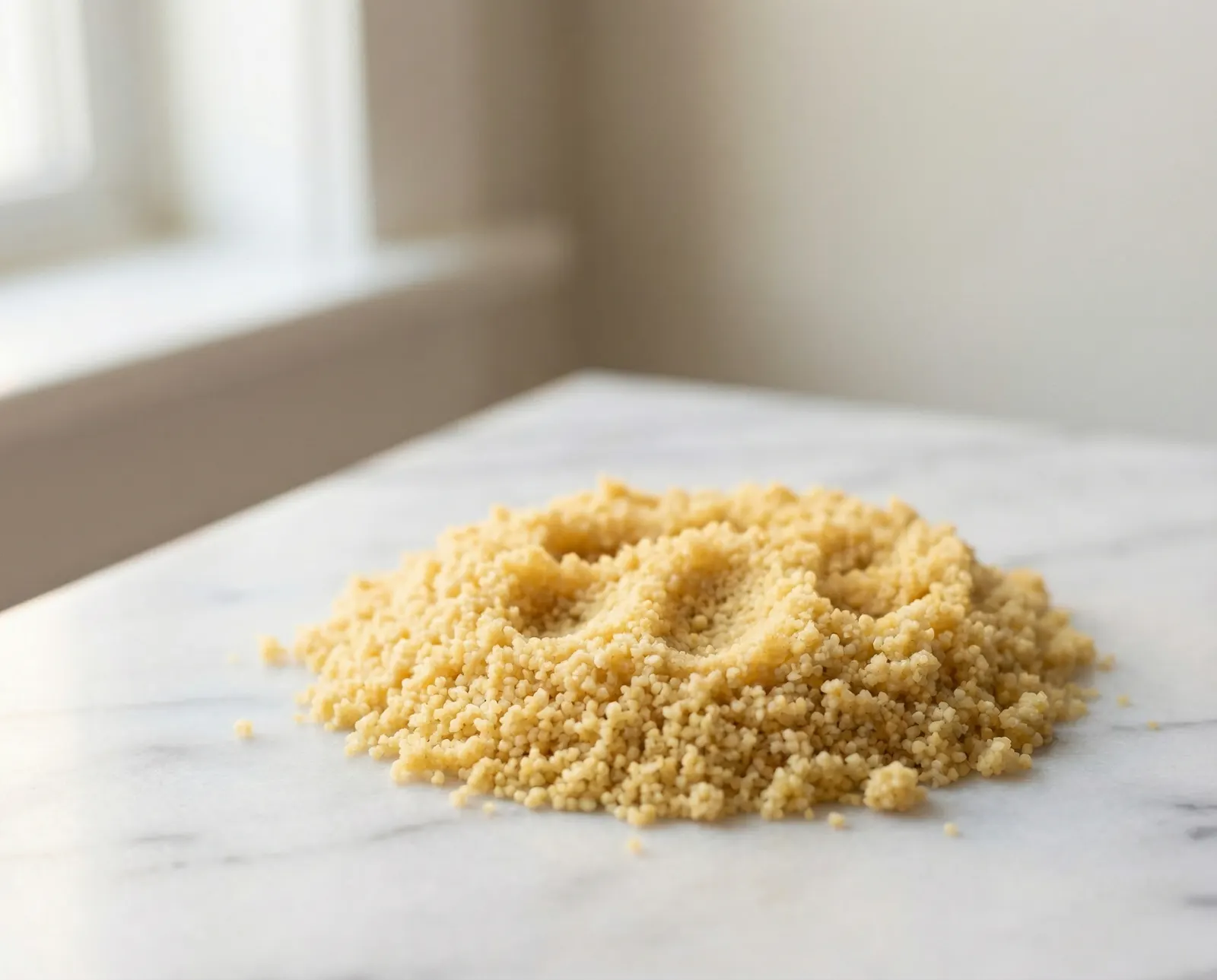
Couscous consists of small steamed granules of rolled durum wheat semolina. It is a staple of North African cuisine and a great energy source for growing babies. It is rich in selenium, which supports the immune system, and provides B-vitamins. Its tiny size makes it an excellent 'bridge' food for babies learning to manage textures without the risk associated with larger chunks.
How to serve Couscous, by age
- 6mo
From 6 months: Creamy, grain-free puree.
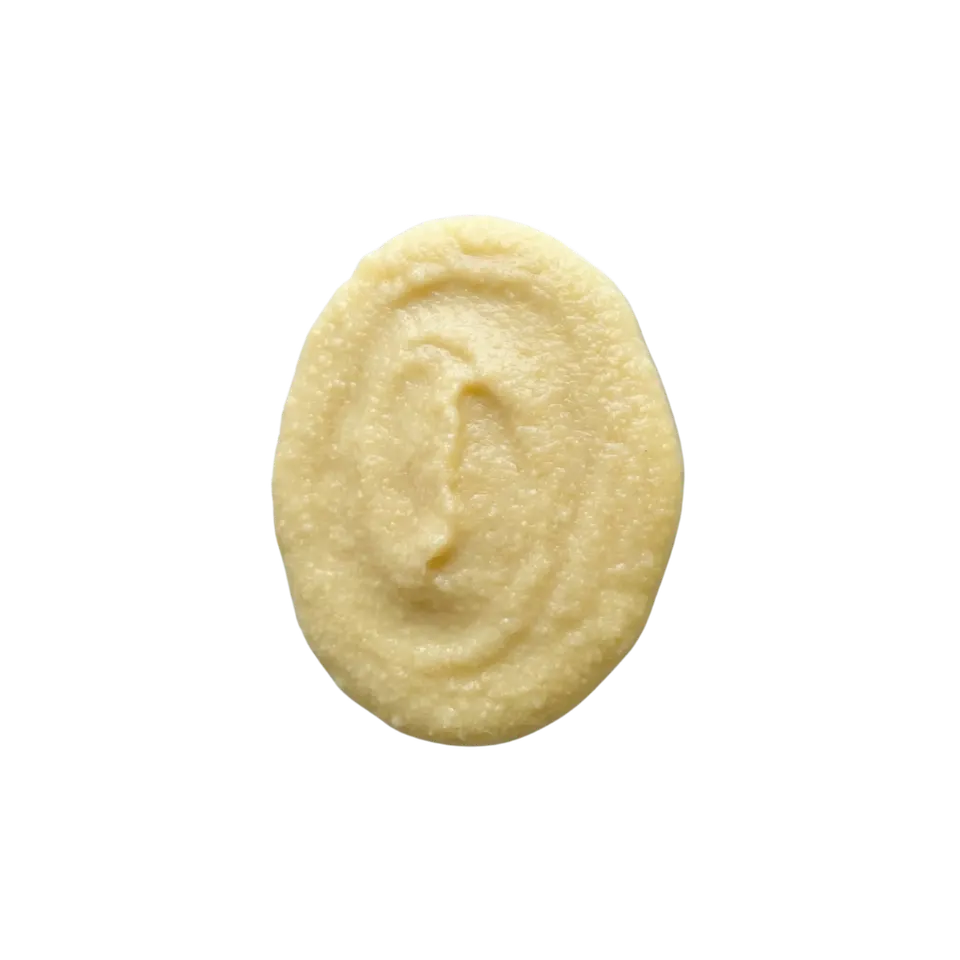
Serve as a smooth, enriched puree. Cook the couscous until very soft, then blend it thoroughly with a moisture-rich base like sweet potato, yogurt, or a vegetable broth. Ensure there are no loose dry grains at this stage. It should be a creamy consistency.
- 9mo
From 9 months: Soft, moist clumps of tiny grains.
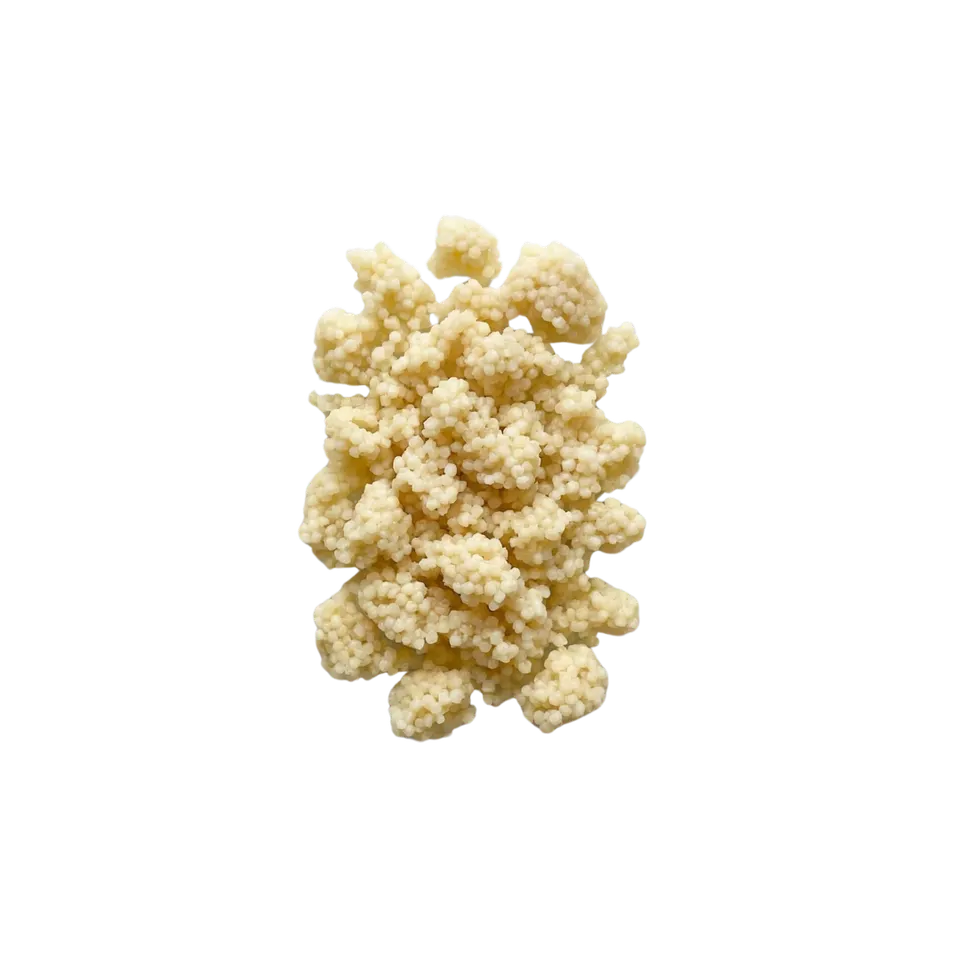
Offer 'clumpy' couscous. Mix the tiny cooked grains with a 'glue' such as mashed avocado, hummus, or thick Greek yogurt. This allows the baby to pick up clumps with their fingers or a spoon. Avoid serving it loose and dry, as the small grains can easily cause coughing or gagging if inhaled.
- 12mo
From 12 months: Soft spheres or loose tiny grains mixed with food.
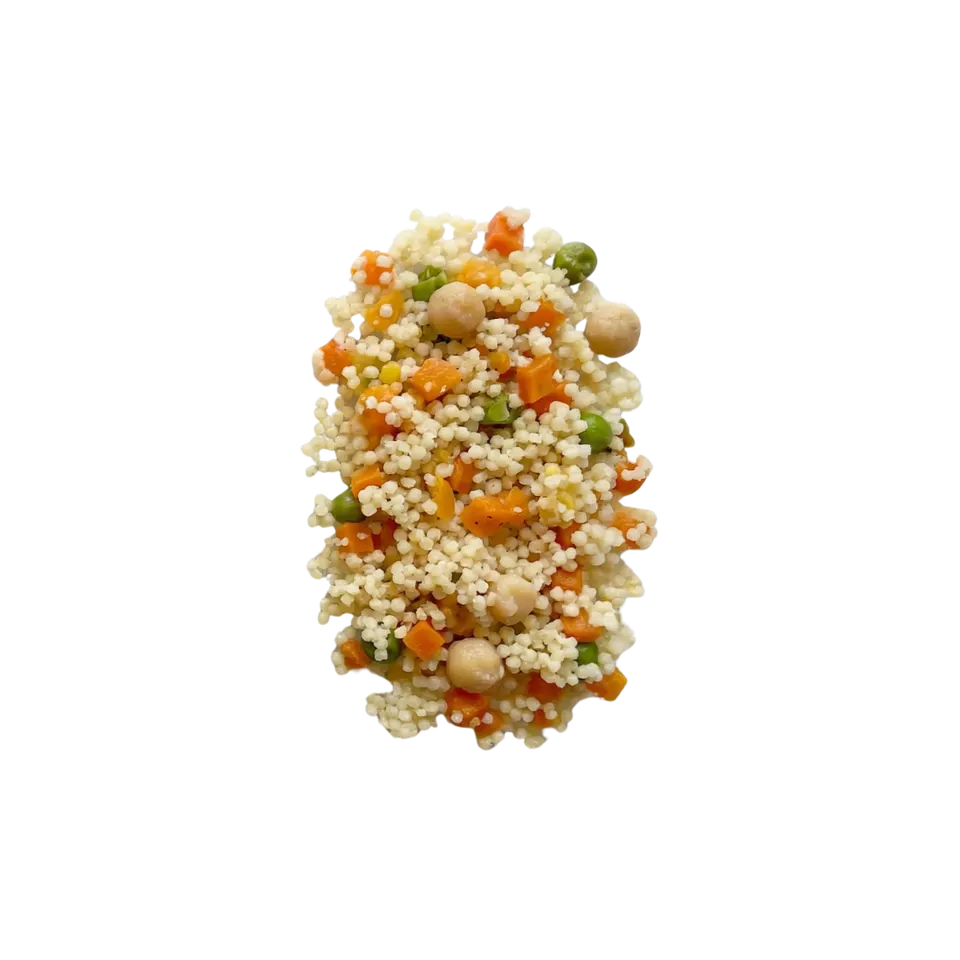
Toddlers can explore larger Pearl (Israeli) Couscous. These soft, chewy spheres are great for practicing chewing skills. You can also serve Moroccan couscous more loosely now, mixed into stews or salads with finely chopped herbs and vegetables like cucumbers or tomatoes.
Choking risk & safe preparation
Low choking risk
Moroccan couscous is very small, but dry grains can be easily aspirated (inhaled), causing coughing. Always ensure it is moist. Pearl couscous is larger and should be cooked until very tender to ensure it is easy to mash with the gums.
Allergen information
This is one of the common childhood allergens. Introduce it on its own and watch for a reaction before mixing it with new foods.
Contains or relates to these allergens:
- Gluten
Nutrition & benefits
An exceptional source of Selenium (27.5mcg per 100g), a powerful antioxidant that protects cells and supports thyroid function. It provides essential carbohydrates for high-energy play and growth.
- Energy Booster
Per 100 g
- Energy
- 376kcal
- Protein
- 12.8g
- Fat
- 0.6g
- Fiber
- 5g
- Iron
- 1.1mg
- Vitamin C
- 0mg
See all nutrients (21)
Macronutrients
- Energy
- 376 kcal
- Protein
- 12.8 g
- Carbohydrates
- 77.4 g
- Fat
- 0.6 g
Key Minerals
- Iron
- 1.1 mg
- Calcium
- 24 mg
- Zinc
- 0.8 mg
- Sodium
- 10 mg
- Potassium
- 166 mg
- Magnesium
- 44 mg
- Phosphorus
- 170 mg
- Copper
- 0.3 mg
- Manganese
- 0.8 mg
Vitamins
- Vitamin A
- 0 mcg
- Vitamin C
- 0 mg
- Vitamin D
- 0 mcg
- Vitamin B6
- 0.1 mg
- Vitamin B12
- 0 mcg
- Folate
- 20 mcg
- Thiamin (B1)
- 0.2 mg
Other
- Fiber
- 5 g
Source: USDA FoodData Central
Pairs well with
Recipes with Couscous
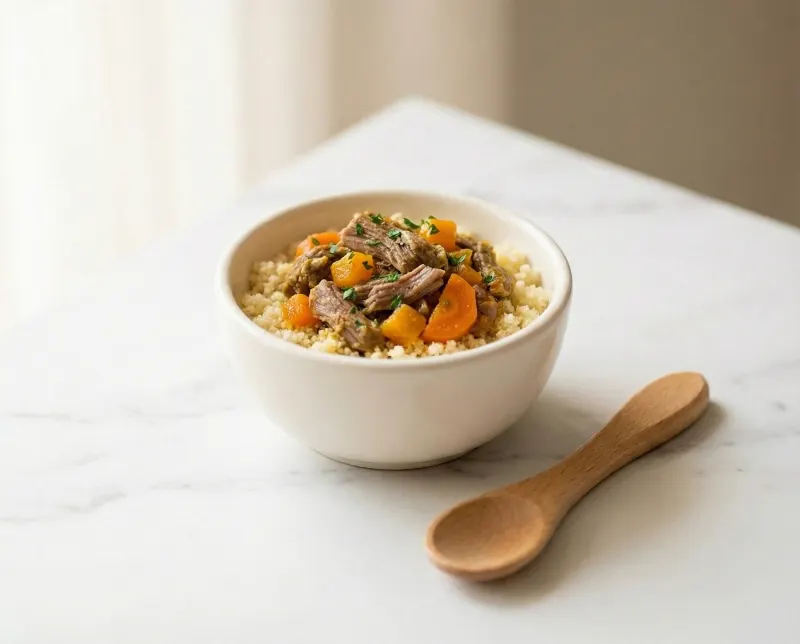
Soft Lamb & Apricot Tagine with Couscous
A fragrant, slow-cooked stew with tender lamb, sweet apricots, and carrots. Served over fluffy couscous, this iron-rich meal introduces mild Mediterranean spices in a toddler-friendly way.
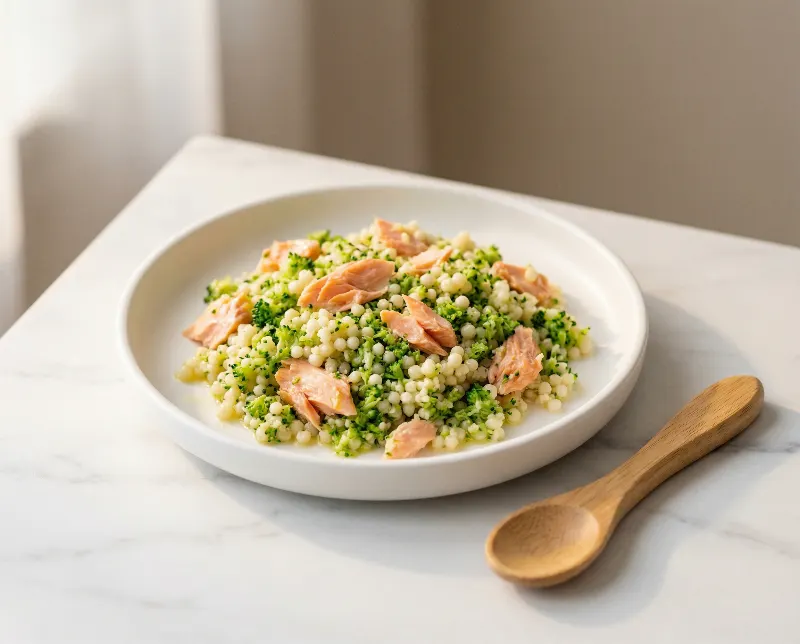
Zesty Salmon & Soft Couscous
A vibrant, brain-boosting meal featuring flaky salmon, fluffy couscous, and steamed broccoli. Tossed in a gentle lemon-olive oil dressing to aid iron absorption and add a refreshing zest.
Frequently asked
Is couscous a grain or pasta?
It is actually a type of pasta! It is made from semolina flour and water, rolled into tiny granules. This makes it very quick to cook—usually just 5 minutes of soaking in boiled water.
Can I give my baby whole wheat couscous?
Yes! Whole wheat couscous is an even better choice as it contains more fiber and minerals. Just ensure it is cooked until very soft, as whole wheat versions can sometimes be a bit grainier.

Track Couscous in the Nica app
Log foods, track reactions, and plan meals — all in one place.

