When can babies eat Brussels Sprouts?
Safe from: 6 months
Common allergen: No
Choking risk: High
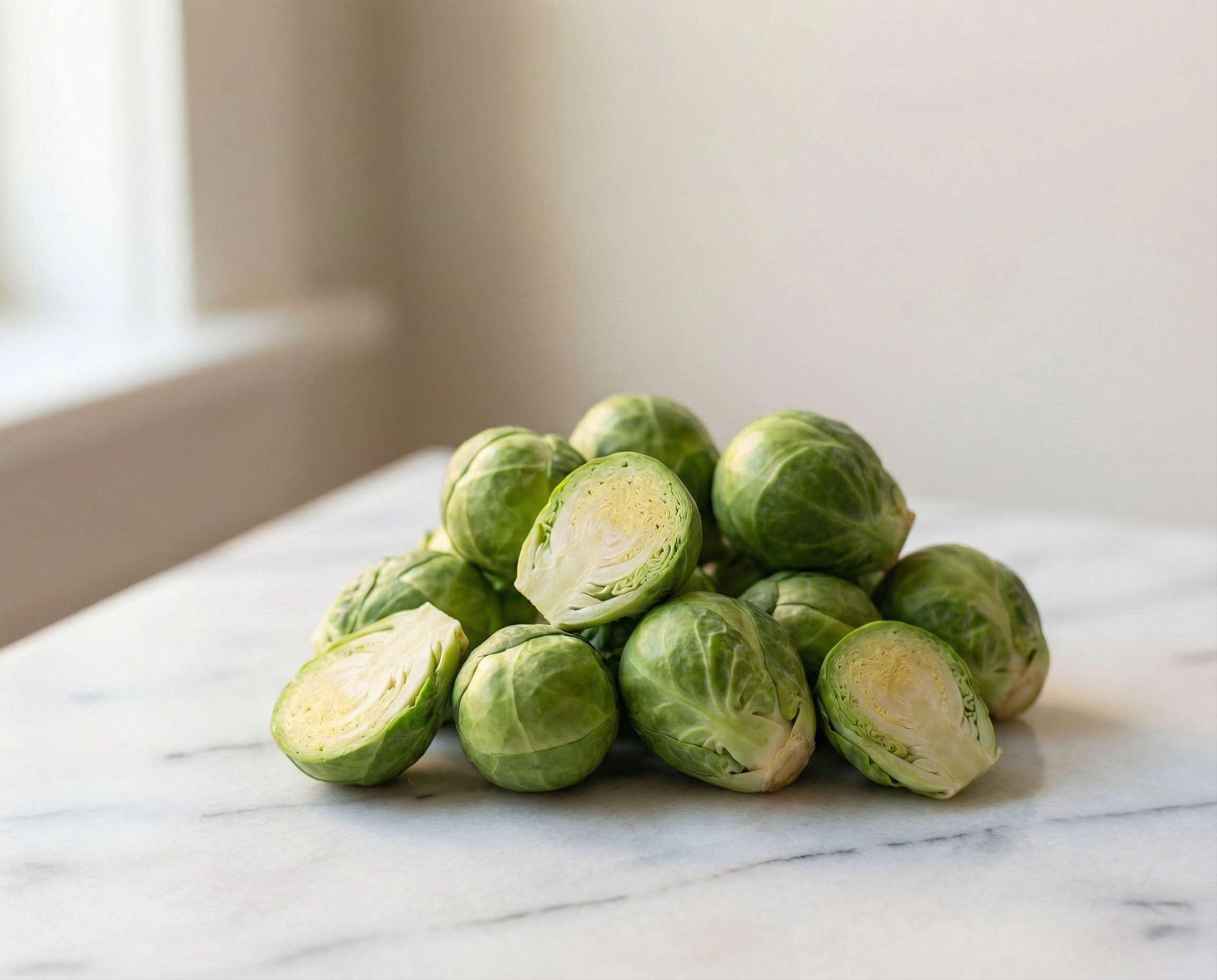
Brussels sprouts are miniature members of the cabbage family, packed with fiber, Vitamin K, and Vitamin C. They contain glucosinolates, which support the body's natural detoxification and immune systems. While they can have a strong flavor, roasting them brings out a natural sweetness that babies often enjoy.
Age guide
| Stage | Min age | Serving | Texture |
|---|---|---|---|
| 6m+ | 6m | Serve as a smooth puree. Steam until very soft and blend with a little breast milk or olive oil. To balance the strong flavor, consider blending them with a sweeter vegetable like sweet potato or apple. Do not serve whole sprouts. | Silky, smooth puree. |
| 9m+ | 9m | Offer finely shredded or quartered, well-cooked sprouts. Roasting the sprouts halved or quartered makes them tender and sweet. Ensure the leaves are soft and not crispy or burnt, as dry leaves can cause gagging. At this stage, they are great for practicing the pincer grasp. | Soft-cooked shreds or small quarters. |
| 12m+ | 12m | Toddlers can enjoy halved sprouts. You can roast them with a drizzle of maple syrup or balsamic glaze to further reduce any bitterness. Continue to avoid serving them whole until the child is older and has advanced chewing skills. | Halved, tender roasted sprouts. |
Pairs well with
Frequently asked
Track Brussels Sprouts in the Nica app
Log foods, track reactions, and plan meals — all in one place.